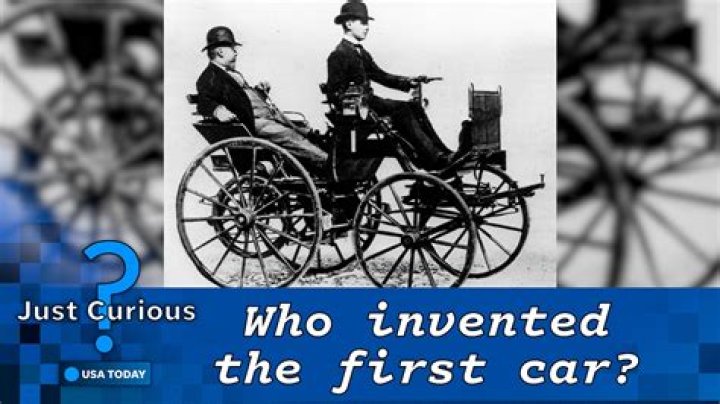
Imagine a world without cars—a world where transportation relied solely on horses, carriages, and human effort. The invention of the car revolutionized how we move, shaping modern life in ways unimaginable to previous generations. But who exactly was behind this groundbreaking innovation, and when did it all begin? In this article, we will explore the fascinating history of the automobile, from its earliest prototypes to the mass production era that changed the world forever.
From steam-powered carriages to internal combustion engines, the journey of automotive innovation is filled with remarkable milestones and visionary inventors. Understanding who invented the car and when it was created not only sheds light on the past but also highlights the technological advancements that continue to drive progress today.
This article aims to provide a detailed and authoritative exploration of the origins of the automobile, supported by historical data and insights from credible sources. Whether you're a history enthusiast, a car aficionado, or simply curious about the roots of modern transportation, you'll find everything you need to know here.
The Early History of Transportation
Before the invention of the car, humans relied heavily on animal-powered transportation, such as horses and oxen. The need for faster and more efficient means of travel drove inventors to experiment with various forms of mechanized transport. The first significant step towards the modern automobile came in the 18th century when inventors began exploring steam power as a potential solution.
Steam-powered vehicles, although rudimentary by today's standards, laid the foundation for future innovations. These early attempts at mechanized transport were slow, bulky, and often dangerous, but they marked the beginning of a new era in human mobility.
Key Inventors and Their Contributions
The invention of the car cannot be attributed to a single individual. Instead, it was the result of the cumulative efforts of several inventors and engineers over several centuries. Below, we explore the contributions of some of the most notable figures in automotive history:
Nicolas-Joseph Cugnot and the First Steam-Driven Vehicle
In 1769, French military engineer Nicolas-Joseph Cugnot created what is widely considered the first full-scale, self-propelled mechanical vehicle. His three-wheeled steam-powered "fardier" was designed to transport artillery and could reach speeds of up to 2.5 miles per hour.
Karl Benz and the Patent Motorwagen
Fast-forward to the late 19th century, and we encounter Karl Benz, a German engineer who is often credited with inventing the first practical automobile powered by an internal combustion engine. In 1886, Benz patented his "Motorwagen," which became a milestone in automotive history.
Biography: Nicolas-Joseph Cugnot
Nicolas-Joseph Cugnot was born on February 26, 1725, in Void-Vacon, France. He served in the French Army as an engineer and later became an inventor known for his pioneering work in steam technology. Below is a summary of his key achievements:
| Full Name | Nicolas-Joseph Cugnot |
|---|---|
| Date of Birth | February 26, 1725 |
| Place of Birth | Void-Vacon, France |
| Notable Invention | First full-scale steam-powered vehicle (1769) |
| Legacy | Pioneering figure in the development of mechanized transport |
The Invention of Steam-Powered Cars
Steam-powered cars were among the earliest attempts at mechanized transportation. These vehicles used steam engines to generate power, much like the locomotives of the time. While they were innovative, they had significant limitations, such as slow speeds and limited range.
Despite these drawbacks, steam-powered cars played a crucial role in advancing the technology that would eventually lead to the development of gasoline-powered automobiles.
The Rise of Electric Vehicles
Electric cars were another early contender in the race to dominate the automotive industry. In the late 19th and early 20th centuries, electric vehicles (EVs) were seen as a cleaner and more practical alternative to steam and gasoline-powered cars. They were quieter, easier to operate, and required less maintenance.
However, the limited battery technology of the time restricted their range and charging capabilities, which ultimately led to their decline in popularity until recent years.
The Advent of Internal Combustion Engines
The invention of the internal combustion engine marked a turning point in automotive history. This technology, which uses the combustion of fuel to generate power, became the dominant force in the automobile industry. Inventors like Nikolaus Otto and Gottlieb Daimler played pivotal roles in refining and improving this technology.
Advantages of Internal Combustion Engines
- Higher efficiency compared to steam engines
- Greater range and speed
- Compact and lightweight design
The Era of Mass Production
The mass production of automobiles began in earnest with the introduction of Henry Ford's assembly line in 1913. This innovation drastically reduced the cost of manufacturing cars, making them accessible to the average consumer. Ford's Model T became an icon of the early 20th century and symbolized the democratization of personal transportation.
This era also saw the rise of automotive giants like General Motors and Chrysler, which further propelled the industry forward.
The Impact of Cars on Society
The invention of the car had profound effects on society, transforming how people lived, worked, and traveled. Below are some of the key impacts:
Economic Growth
The automotive industry became a cornerstone of the global economy, creating millions of jobs and driving innovation in related fields such as oil extraction, road construction, and urban planning.
Urbanization
Cars enabled people to live farther from city centers, leading to the growth of suburbs and reshaping the urban landscape.
Environmental Concerns
While cars brought convenience, they also raised significant environmental challenges, including air pollution and climate change. These issues continue to shape the development of modern transportation solutions.
The Future of Automobiles
As we look to the future, the automotive industry is undergoing another wave of transformation. Electric vehicles (EVs), autonomous driving technology, and sustainable materials are at the forefront of this revolution. Companies like Tesla, Toyota, and Waymo are leading the charge, promising a future where transportation is cleaner, safer, and more efficient.
Conclusion and Call to Action
In conclusion, the invention of the car was a collaborative effort spanning centuries and involving numerous inventors and engineers. From Nicolas-Joseph Cugnot's steam-powered vehicle to Karl Benz's Patent Motorwagen and Henry Ford's mass production techniques, each milestone contributed to the evolution of modern automobiles.
Today, as we face new challenges and opportunities in the automotive industry, it's essential to learn from the past while embracing innovation for the future. We invite you to share your thoughts and questions in the comments below. Additionally, explore our other articles on automotive history and technology to deepen your understanding of this fascinating field.
Thank you for reading, and don't forget to subscribe to our newsletter for the latest updates on the world of automobiles!
Sources:




