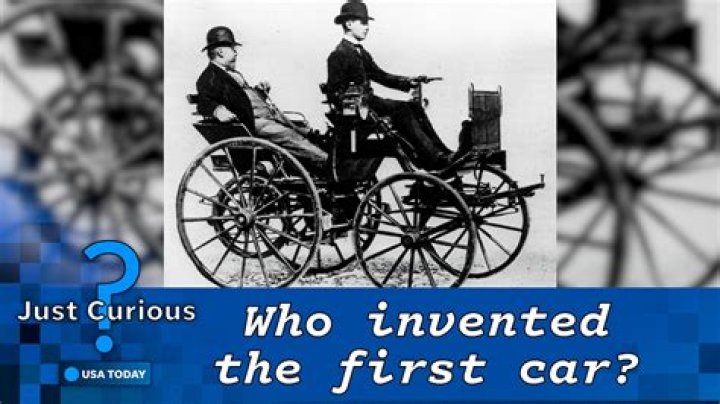
The invention of the first automobile is a fascinating chapter in human history that marked the beginning of modern transportation. The question "what year was the first automobile invented" has intrigued many, as it represents a pivotal moment in technological advancement. This article dives deep into the origins of automobiles, tracing their evolution from early prototypes to the vehicles we know today.
Throughout history, humans have sought innovative ways to improve mobility. The invention of the automobile revolutionized how people and goods moved across distances, transforming economies and societies worldwide. Understanding the timeline of this invention provides valuable insight into the ingenuity of early inventors and engineers.
In this article, we will explore the year the first automobile was invented, the key figures behind its creation, and the technological milestones that followed. By the end, you'll have a clear understanding of the historical significance of this groundbreaking invention.
Early Transportation and the Need for Innovation
Before the invention of the automobile, humans relied heavily on animal-drawn carriages and walking for transportation. While these methods were effective for short distances, they were inefficient for long journeys and transporting heavy loads. The need for faster and more reliable modes of transport led inventors to experiment with new technologies.
By the late 18th century, inventors began exploring the potential of steam power for transportation. Although steam engines were initially used for industrial purposes, their application in vehicles opened the door to revolutionary possibilities. The stage was set for the creation of the first automobile.
Challenges Faced by Early Inventors
- Limited understanding of mechanics and engineering
- High costs of materials and production
- Skepticism from the public and industry leaders
What Year Was the First Automobile Invented?
The first automobile is widely attributed to Nicolas-Joseph Cugnot, who developed a steam-powered vehicle in 1769. This three-wheeled vehicle was designed to transport artillery for the French military. While it was functional, its limited speed and range made it impractical for widespread use.
Later, in the 19th century, advancements in internal combustion engines paved the way for more efficient automobiles. Karl Benz, a German engineer, is often credited with inventing the first practical gasoline-powered automobile in 1886. His creation, the Benz Patent-Motorwagen, is considered a landmark in automotive history.
Key Milestones in Automobile History
- 1769: Nicolas-Joseph Cugnot's steam-powered vehicle
- 1807: François Isaac de Rivaz's hydrogen-powered vehicle
- 1886: Karl Benz's gasoline-powered Patent-Motorwagen
Key Figures in the Invention of the Automobile
The invention of the automobile was not the work of a single individual but rather the culmination of efforts by numerous innovators. Some of the most notable figures include:
- Nicolas-Joseph Cugnot: Pioneered steam-powered vehicles in the late 18th century.
- Karl Benz: Developed the first practical gasoline-powered automobile in 1886.
- Henry Ford: Revolutionized automobile production with the assembly line, making cars more affordable and accessible.
Biography of Karl Benz
| Full Name | Karl Friedrich Michael Vaillant (later changed to Benz) |
|---|---|
| Birthdate | November 25, 1844 |
| Birthplace | Karlsruhe, Baden, Germany |
| Profession | Engineer and Inventor |
| Major Achievement | Inventor of the first gasoline-powered automobile |
The Evolution of Steam-Powered Vehicles
Steam-powered vehicles played a crucial role in the early development of automobiles. These vehicles utilized steam engines to generate power, allowing them to travel short distances. However, their heavy weight and limited fuel efficiency made them impractical for everyday use.
Despite their limitations, steam-powered vehicles laid the groundwork for future innovations. Inventors like Richard Trevithick and Oliver Evans contributed significantly to the advancement of steam technology, paving the way for more advanced engines.
Limitations of Steam-Powered Vehicles
- High fuel consumption
- Slow speed and limited range
- Complex maintenance requirements
The Emergence of the Gasoline Engine
The invention of the gasoline engine marked a turning point in automobile history. Unlike steam-powered vehicles, gasoline engines were lighter, more efficient, and easier to maintain. This made them ideal for mass production and widespread use.
Karl Benz's Patent-Motorwagen, powered by a single-cylinder gasoline engine, demonstrated the potential of this technology. Subsequent advancements in engine design further enhanced the performance and reliability of gasoline-powered vehicles.
Innovations in Gasoline Engine Technology
- Development of multi-cylinder engines
- Introduction of carburetors for fuel efficiency
- Improvements in ignition systems
Early Electric Vehicles: A Brief History
Electric vehicles (EVs) have gained significant attention in recent years, but their history dates back to the 19th century. The first electric vehicle was built by Robert Anderson in the 1830s, using non-rechargeable electric cells. Later, in the 1880s, inventors like Thomas Parker developed rechargeable batteries, making EVs more practical.
Despite their early promise, electric vehicles faced challenges such as limited range and slow charging times. These limitations led to the dominance of gasoline-powered vehicles in the early 20th century. However, recent advancements in battery technology have revived interest in EVs.
The Era of Mass Production
The mass production of automobiles began in the early 20th century, thanks to Henry Ford's innovative assembly line technique. This method significantly reduced production costs, making cars more affordable for the average consumer. Ford's Model T, introduced in 1908, became one of the most popular vehicles of its time.
Mass production not only transformed the automotive industry but also had a profound impact on global economies. It created new job opportunities and stimulated industrial growth, shaping the modern world as we know it.
Henry Ford's Legacy
- Introduced the moving assembly line in 1913
- Reduced the production time of the Model T from 12 hours to 93 minutes
- Set the stage for modern manufacturing techniques
Technological Advancements in Automobiles
Over the years, automobiles have undergone significant technological advancements, enhancing their performance, safety, and efficiency. Innovations such as anti-lock braking systems (ABS), airbags, and hybrid engines have made modern cars safer and more environmentally friendly.
Recent developments in autonomous driving technology and connectivity features have further transformed the driving experience. These advancements reflect the ongoing commitment of engineers and manufacturers to push the boundaries of automotive technology.
Key Safety Features in Modern Automobiles
- Anti-lock braking systems (ABS)
- Electronic stability control (ESC)
- Advanced driver-assistance systems (ADAS)
The Modern Impact of Automobiles
Automobiles have had a profound impact on modern society, influencing everything from urban planning to global trade. They have enabled faster and more efficient transportation, connecting people and goods across vast distances. However, the widespread use of automobiles has also raised concerns about environmental impact and traffic congestion.
To address these challenges, governments and industries are investing in sustainable transportation solutions, including electric and hydrogen-powered vehicles. These efforts aim to reduce carbon emissions and promote a cleaner, greener future.
Future Trends in Automotive Technology
The future of automobiles looks promising, with numerous trends shaping the industry. Electric vehicles (EVs) are expected to dominate the market, driven by advancements in battery technology and government incentives. Autonomous driving technology is also gaining traction, promising safer and more efficient road travel.
Additionally, the integration of artificial intelligence (AI) and Internet of Things (IoT) technologies is set to revolutionize the driving experience. These innovations will enhance connectivity, improve traffic management, and create new opportunities for mobility services.
Predictions for the Future of Automobiles
- Increased adoption of electric vehicles by 2030
- Widespread deployment of autonomous vehicles
- Expansion of mobility-as-a-service (MaaS) platforms
Kesimpulan
The invention of the first automobile in 1769 marked the beginning of a transportation revolution that continues to shape our world today. From steam-powered vehicles to modern electric cars, the evolution of automobiles reflects the ingenuity and perseverance of inventors and engineers.
As we look to the future, it is clear that automobiles will play a vital role in shaping sustainable and connected societies. By embracing innovative technologies and addressing environmental challenges, the automotive industry can continue to drive progress and improve lives.
We invite you to share your thoughts and insights in the comments section below. Have you ever wondered about the origins of automobiles? What excites you most about the future of transportation? Don't forget to explore other articles on our site for more fascinating reads!