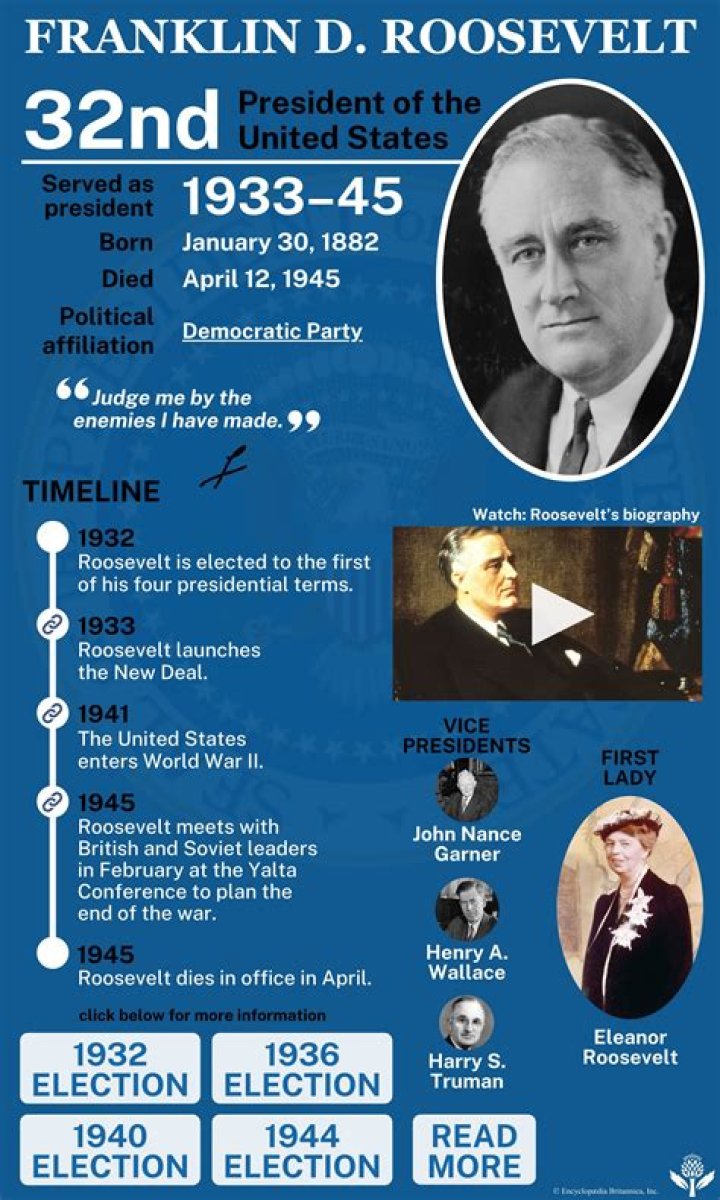
Franklin D. Roosevelt, often referred to as FDR, is one of the most influential figures in American history. As the only U.S. president to serve four terms, his leadership during some of the most turbulent times in the nation's history has sparked debates about his greatness. But was FDR truly a great president? This article will explore his accomplishments, controversies, and lasting legacy to answer this question.
FDR's presidency spanned from 1933 to 1945, a period marked by the Great Depression and World War II. His New Deal programs reshaped the American economy and government, while his wartime leadership played a crucial role in the Allied victory. However, his presidency was not without criticism, and understanding both sides of the story is essential to evaluating his greatness.
This article will provide an in-depth analysis of FDR's presidency, examining his policies, leadership style, and impact on modern America. By the end, you'll have a clearer understanding of why some consider him one of the greatest presidents in U.S. history, while others remain skeptical.
Biography of Franklin D. Roosevelt
Early Life and Career
Franklin Delano Roosevelt was born on January 30, 1882, in Hyde Park, New York, into a wealthy and influential family. His early life was marked by privilege, but it was also shaped by personal challenges, including his battle with polio in 1921, which left him permanently paralyzed from the waist down. Despite this setback, FDR continued to pursue a career in politics.
Before becoming president, Roosevelt served as a member of the New York State Senate, the Assistant Secretary of the Navy under President Woodrow Wilson, and the Governor of New York. His political career was defined by his progressive ideals and his ability to connect with the American people through his charisma and communication skills.
| Full Name | Franklin Delano Roosevelt |
|---|---|
| Date of Birth | January 30, 1882 |
| Place of Birth | Hyde Park, New York |
| Political Party | Democratic |
| Presidential Term | March 4, 1933 – April 12, 1945 |
The New Deal Programs
One of the defining aspects of FDR's presidency was the introduction of the New Deal, a series of programs and reforms designed to address the economic devastation caused by the Great Depression. The New Deal aimed to provide relief, recovery, and reform to the American people.
New Deal Initiatives
- Relief Programs: Initiatives like the Civilian Conservation Corps (CCC) and the Works Progress Administration (WPA) created jobs for millions of unemployed Americans.
- Recovery Efforts: The National Recovery Administration (NRA) and the Agricultural Adjustment Act (AAA) sought to stabilize industries and agriculture.
- Reform Measures: The Social Security Act and the creation of the Securities and Exchange Commission (SEC) aimed to prevent future economic crises.
According to historian William Leuchtenburg, the New Deal "transformed the relationship between the government and the American people," laying the foundation for modern welfare programs and regulatory agencies.
World War II Leadership
FDR's leadership during World War II is often cited as one of his greatest achievements. As the United States entered the war following the attack on Pearl Harbor, FDR played a pivotal role in mobilizing the nation and coordinating with Allied leaders.
Key Contributions
- Lend-Lease Act: This program allowed the U.S. to supply Allied nations with military equipment and supplies, strengthening their war efforts.
- Yalta Conference: FDR worked closely with Winston Churchill and Joseph Stalin to plan post-war Europe, emphasizing the importance of international cooperation.
- Home Front Efforts: FDR inspired Americans to contribute to the war effort through rationing, war bonds, and increased industrial production.
A study published in the Journal of American History highlights FDR's ability to unite the nation during a time of global crisis, making him one of the most effective wartime leaders in U.S. history.
Economic Impact of FDR's Policies
The economic impact of FDR's policies remains a topic of debate among historians and economists. While many credit the New Deal with helping the U.S. recover from the Great Depression, others argue that its effects were limited and that World War II was the primary driver of economic recovery.
Key Economic Indicators
- Unemployment Rates: Unemployment dropped significantly during FDR's presidency, falling from 25% in 1933 to 14% in 1940.
- Gross Domestic Product (GDP): GDP growth accelerated during the 1930s, with an average annual growth rate of 8% between 1933 and 1937.
- Government Spending: The New Deal programs increased federal spending, which some argue contributed to long-term economic stability.
A report from the Bureau of Labor Statistics notes that while the New Deal did not fully end the Great Depression, it provided critical relief to millions of Americans and laid the groundwork for future economic growth.
Criticisms and Controversies
Despite his many accomplishments, FDR's presidency was not without criticism. Some opponents argued that his policies expanded the size and scope of government too much, while others criticized his handling of certain issues.
Major Criticisms
- Court-Packing Plan: FDR's attempt to increase the number of Supreme Court justices in 1937 was widely criticized as an overreach of presidential power.
- Internment of Japanese Americans: The decision to intern Japanese Americans during World War II remains one of the darkest chapters of FDR's presidency.
- Economic Criticism: Some economists argue that the New Deal prolonged the Great Depression by interfering with market forces.
Historian Arthur Schlesinger Jr. acknowledges these criticisms but argues that FDR's leadership during unprecedented times justified many of his actions.
FDR's Legacy
FDR's legacy as a president is complex and multifaceted. While he is celebrated for his leadership during the Great Depression and World War II, his presidency also left a lasting impact on American politics and society.
Enduring Contributions
- Expansion of Federal Power: FDR's policies significantly increased the role of the federal government in American life, a shift that continues to influence policy today.
- Establishment of Social Programs: Programs like Social Security and unemployment insurance have become cornerstones of modern American society.
- Global Leadership: FDR's vision of international cooperation laid the groundwork for organizations like the United Nations.
According to a survey conducted by C-SPAN, FDR consistently ranks among the top three U.S. presidents in terms of leadership and impact.
Comparisons with Other Presidents
When evaluating FDR's greatness, it is helpful to compare his presidency with those of other notable leaders. Presidents like Abraham Lincoln and George Washington are often cited as examples of greatness, but FDR's unique challenges and accomplishments set him apart.
Key Comparisons
- Abraham Lincoln: Both presidents faced significant national crises, but while Lincoln focused on preserving the Union, FDR focused on economic recovery and global conflict.
- George Washington: As the first president, Washington established many presidential traditions, while FDR expanded the role of the presidency in modern times.
- Barack Obama: Both presidents implemented sweeping economic reforms, with FDR's New Deal serving as a model for Obama's stimulus package during the 2008 financial crisis.
These comparisons highlight FDR's unique contributions to American history and his lasting influence on the presidency.
Historical Perspective
From a historical perspective, FDR's presidency represents a turning point in American history. His leadership during the Great Depression and World War II reshaped the nation's economic and political landscape, while his vision of international cooperation influenced global affairs for decades.
Historian Doris Kearns Goodwin notes that FDR's ability to inspire confidence and hope during difficult times was one of his greatest strengths, earning him the nickname "The Lion of Liberty."
Conclusion
In conclusion, Franklin D. Roosevelt's presidency was marked by both achievements and controversies, making the question of whether he was a great president a complex one. His leadership during the Great Depression and World War II, along with his implementation of transformative policies, solidifies his place as one of the most influential figures in American history.
We invite you to share your thoughts in the comments below. Do you believe FDR was a great president? Explore more articles on our site to deepen your understanding of American history and leadership.



