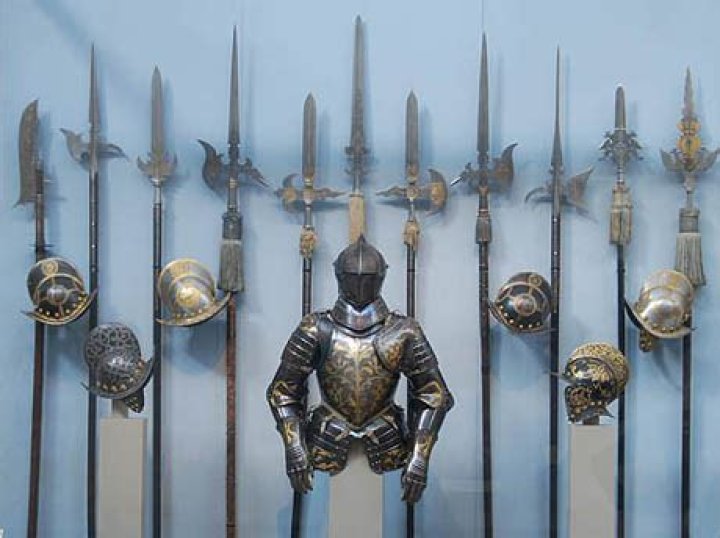
Warfare and weapons in the Middle Ages played a pivotal role in shaping the history of Europe and beyond. During this era, military technology and strategies evolved significantly, influencing political power structures and societal development. This article delves into the intricacies of medieval warfare, offering a detailed analysis of the weapons, tactics, and key figures that defined the period.
The Middle Ages, often referred to as the medieval period, spanned from the 5th to the late 15th century. It was a time of great change and transformation, marked by the rise of feudalism, the proliferation of knights, and the development of sophisticated weaponry. Understanding the warfare of this era provides valuable insights into how societies functioned and how conflicts were resolved.
This article will explore the weapons and strategies used in medieval battles, the evolution of armor and fortifications, and the impact of warfare on medieval life. By the end, readers will have a comprehensive understanding of the military landscape during this fascinating historical period.
Introduction to Middle Ages Warfare
Warfare in the Middle Ages was characterized by a blend of tradition and innovation. The period saw the rise of cavalry units, the dominance of feudal systems, and the widespread use of castles as defensive structures. The concept of chivalry also emerged during this time, shaping the behavior of knights both on and off the battlefield.
The primary goal of medieval warfare was often to secure land, resources, or political power. This led to the development of specialized weapons and tactics designed to overcome fortified positions and heavily armored opponents. The Middle Ages also witnessed the rise of professional armies, replacing the earlier reliance on feudal levies.
Key Features of Medieval Warfare
- Heavy reliance on cavalry, particularly knights.
- Development of fortifications such as castles and fortified towns.
- Use of siege engines like trebuchets and battering rams.
- Evolution of infantry tactics, including the use of pikemen and archers.
Types of Weapons Used in the Middle Ages
Medieval warriors employed a wide array of weapons, each suited to specific purposes. These ranged from simple handheld tools to complex siege machines. Understanding the variety of weapons used during this period provides insight into the strategies employed by medieval armies.
Hand-to-Hand Combat Weapons
Knights and foot soldiers relied heavily on melee weapons for close combat. These included:
- Swords: The iconic weapon of the knight, swords were prized for their versatility and status symbol.
- Axes: Used by both knights and common soldiers, axes were effective for breaking through armor.
- Maces: Designed to deliver devastating blows, maces were particularly effective against armored opponents.
Ranged Weapons
Ranged weapons played a crucial role in medieval battles, allowing armies to engage enemies from a distance. These included:
- Bows: Lightweight and easy to use, bows were the primary ranged weapon of the period.
- Crossbows: Known for their power and accuracy, crossbows were favored by specialized units.
- Javelins: Used by infantry and cavalry, javelins allowed for ranged attacks before engaging in melee combat.
Armors and Protection
Protective gear was essential for medieval warriors, as it determined their survival in battle. Armor evolved significantly over the centuries, transitioning from simple leather garments to intricate plate armor.
Evolution of Armor
- Leather Armor: Early in the Middle Ages, leather armor was the norm due to its affordability and ease of production.
- Chainmail: Introduced in the early medieval period, chainmail provided superior protection against blade and arrow strikes.
- Plate Armor: By the late Middle Ages, plate armor became the standard for knights, offering unparalleled defense.
According to historian John Keegan, "The development of plate armor marked a significant advancement in military technology, allowing knights to withstand increasingly powerful weapons."
Fortifications in Medieval Warfare
Castles and fortified towns were central to medieval warfare, serving as both defensive structures and symbols of power. These fortifications were designed to withstand prolonged sieges and repel invaders.
Key Features of Medieval Fortifications
- Moats: Water-filled trenches surrounding castles, making direct assault more difficult.
- Battlements: Walls with crenellations, providing archers with cover while allowing them to fire upon attackers.
- Turrets: Small towers used for observation and flanking fire.
Fortifications played a crucial role in determining the outcome of many medieval conflicts, as they often dictated the terms of engagement.
Tactics and Strategies
Medieval warfare was not merely about brute force; it required careful planning and execution. Commanders employed a variety of tactics to outmaneuver their opponents and achieve victory.
Common Tactical Formations
- Shield Wall: A defensive formation used by infantry to repel cavalry charges.
- Flanking Maneuvers: Attacking an enemy's side or rear to disrupt their formation.
- Siege Warfare: Using siege engines and prolonged assaults to capture fortified positions.
According to the Oxford Dictionary of Military History, "Medieval tactics were often influenced by the terrain and available resources, leading to diverse approaches in different regions."
Key Battles in Medieval History
Several battles from the Middle Ages have left an indelible mark on history, shaping the course of nations and empires. These conflicts highlight the importance of warfare during this period.
Battle of Hastings (1066)
This decisive battle saw the Norman Conquest of England, led by William the Conqueror. The use of cavalry and archers was instrumental in securing victory.
Battle of Agincourt (1415)
A stunning victory for the English forces, Agincourt demonstrated the effectiveness of longbowmen against heavily armored knights.
Influence of Religion on Warfare
Religion played a significant role in medieval warfare, often serving as a justification for conflict. The Crusades, in particular, exemplified the intersection of faith and military action.
The Crusades
Spanning several centuries, the Crusades were a series of religious wars aimed at reclaiming the Holy Land. They involved countless battles and resulted in significant cultural exchanges between Europe and the Middle East.
Role of Knights in Medieval Society
Knights were the elite warriors of the Middle Ages, embodying the ideals of chivalry and martial prowess. Their role extended beyond the battlefield, influencing societal norms and political structures.
Knights and Feudalism
Knights were integral to the feudal system, serving as vassals to lords in exchange for land and protection. This relationship formed the backbone of medieval society, ensuring loyalty and order.
Technological Advancements in Weapons
The Middle Ages saw significant advancements in weapon technology, driven by the demands of warfare. Innovations in metallurgy and engineering led to the creation of more effective and sophisticated weapons.
Gunpowder and Its Impact
The introduction of gunpowder in the late Middle Ages revolutionized warfare, leading to the development of cannons and firearms. These weapons gradually replaced traditional siege engines and changed the nature of combat forever.
Impact of Warfare on Society
Warfare in the Middle Ages had profound effects on society, influencing everything from economic systems to cultural practices. The constant threat of conflict shaped the daily lives of people across Europe.
Social Consequences of Warfare
- Population Decline: Wars and sieges often resulted in significant loss of life, affecting population growth.
- Economic Disruption: The cost of maintaining armies and fortifications strained local economies.
- Cultural Exchange: Warfare facilitated the exchange of ideas, technologies, and goods between different regions.
As historian Norman Cantor notes, "The Middle Ages were a period of continuous conflict, but also one of remarkable cultural and technological progress."
Conclusion
Warfare and weapons in the Middle Ages were defining aspects of this historical period, shaping societies and influencing the course of human history. From the evolution of armor and fortifications to the development of advanced weaponry, the medieval era was a time of innovation and adaptation in military affairs.
We invite readers to explore further articles on our website, delving deeper into the fascinating world of medieval history. Your feedback and questions are always welcome, so feel free to leave a comment or share this article with others who might find it interesting. Together, let's continue to uncover the rich tapestry of our shared past.