Chai tea has gained immense popularity worldwide due to its rich flavor and numerous health benefits. However, many people are curious about chai caffeine content and how it compares to other caffeinated beverages. Understanding the caffeine levels in chai tea is crucial for those who are sensitive to caffeine or looking to manage their daily intake. This article dives deep into the topic, providing comprehensive insights into chai tea's caffeine content and its effects on your health.
From its origins in India to its global appeal, chai tea has become a staple in many households. This spiced tea blend is not only delicious but also offers a variety of health benefits. However, the question of chai caffeine content often arises, especially for those who are mindful of their caffeine consumption.
Whether you're a chai enthusiast or simply curious about its caffeine levels, this article will provide you with all the information you need. We'll explore the factors that influence chai caffeine content, compare it with other beverages, and discuss its potential health impacts.
What is Chai Tea?
Chai tea, commonly referred to as "masala chai" in India, is a spiced tea blend that originated in ancient India. It is traditionally made by simmering black tea leaves with a mixture of aromatic spices such as cinnamon, cardamom, cloves, ginger, and black pepper. The result is a rich, flavorful beverage that is both comforting and invigorating.
The popularity of chai tea has grown significantly over the years, with variations now available worldwide. Some modern versions use green tea or herbal blends instead of traditional black tea, offering different caffeine levels and flavor profiles.
Factors Influencing Chai Caffeine Content
The caffeine content in chai tea can vary depending on several factors. Understanding these factors can help you make informed decisions about your chai consumption.
Type of Tea Used
Chai tea is traditionally made with black tea, which contains more caffeine than green or herbal teas. However, some modern blends use green tea or herbal infusions, which have lower caffeine levels. Here's a quick comparison:
- Black tea: Approximately 40-70 mg of caffeine per 8-ounce serving
- Green tea: Approximately 20-45 mg of caffeine per 8-ounce serving
- Herbal teas: Generally caffeine-free
Steeping Time
The length of time you steep chai tea can also affect its caffeine content. Longer steeping times generally result in higher caffeine levels. It's essential to follow the recommended steeping time to achieve the desired flavor and caffeine balance.
Comparing Chai Caffeine Content with Other Beverages
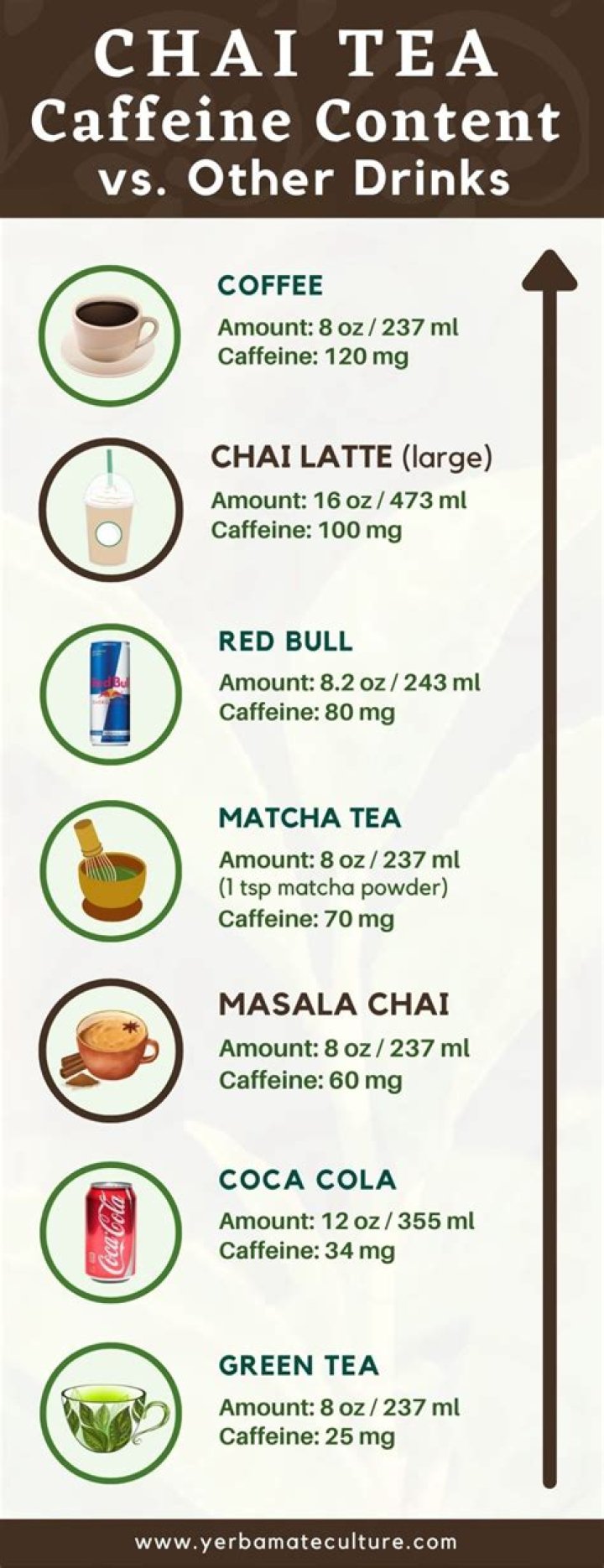
To better understand chai caffeine content, it's helpful to compare it with other popular caffeinated beverages. Here's a breakdown:
- Coffee: Approximately 95 mg of caffeine per 8-ounce serving
- Black tea (chai base): Approximately 40-70 mg of caffeine per 8-ounce serving
- Green tea: Approximately 20-45 mg of caffeine per 8-ounce serving
- Soda: Approximately 25-45 mg of caffeine per 12-ounce serving
As you can see, chai tea generally contains less caffeine than coffee but more than soda, making it a great alternative for those looking to reduce their caffeine intake.
Health Benefits of Chai Tea
Beyond its caffeine content, chai tea offers a variety of health benefits due to its rich blend of spices and antioxidants. Here are some of the key benefits:
- Antioxidant-rich: Chai tea contains polyphenols and other antioxidants that help protect your cells from damage.
- Anti-inflammatory properties: The spices in chai tea, such as ginger and turmeric, have anti-inflammatory effects that may help reduce chronic inflammation.
- Improved digestion: The warm spices in chai tea can aid digestion and alleviate symptoms of indigestion.
- Boosted immunity: The combination of spices in chai tea may help strengthen your immune system.
Chai Caffeine Content and Its Effects on Your Body
While chai tea offers numerous health benefits, it's important to consider how its caffeine content may affect your body. Caffeine can have both positive and negative effects, depending on your individual tolerance and consumption habits.
Positive Effects
Caffeine in chai tea can:
- Enhance alertness and focus
- Improve physical performance
- Boost metabolism
Potential Negative Effects
Excessive caffeine consumption can lead to:
- Increased anxiety
- Difficulty sleeping
- Upset stomach
It's essential to consume chai tea in moderation, especially if you're sensitive to caffeine or have underlying health conditions.
Managing Chai Caffeine Content
If you're concerned about the caffeine content in your chai tea, there are several ways to manage it:
- Choose decaffeinated or herbal chai blends
- Reduce steeping time to lower caffeine levels
- Opt for green tea-based chai for a milder caffeine kick
How to Brew the Perfect Cup of Chai Tea
Brewing a perfect cup of chai tea involves a few simple steps:
- Measure your tea: Use 1-2 teaspoons of loose-leaf chai tea or one tea bag per cup.
- Heat water: Bring fresh water to a boil, then reduce heat to a simmer.
- Steep the tea: Add the tea to the simmering water and let it steep for 3-5 minutes, depending on your desired strength.
- Add milk and sweetener: Stir in milk and sugar or honey to taste.
Chai Caffeine Content: Expert Insights
According to a study published in the Journal of Food Science, the caffeine content in chai tea can vary significantly depending on the type of tea used and brewing methods. Experts recommend consuming chai tea in moderation to enjoy its health benefits without overloading on caffeine.
Conclusion
In conclusion, understanding chai caffeine content is essential for making informed choices about your tea consumption. Chai tea offers a delicious and healthy alternative to coffee, with moderate caffeine levels that can be managed through careful selection and brewing techniques.
We encourage you to share your thoughts and experiences with chai tea in the comments below. For more insightful articles on health, wellness, and lifestyle, explore our website and stay updated on the latest trends and research. Remember, moderation is key when it comes to caffeine consumption, and chai tea can be a wonderful addition to your daily routine when enjoyed responsibly.




