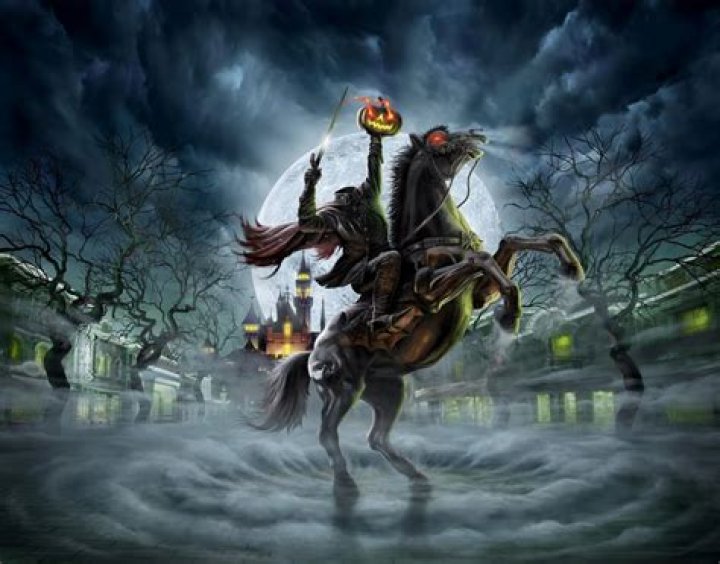
The legend of the Headless Horseman has captivated audiences for centuries, weaving its way into folklore, literature, and popular culture. This mysterious figure, often depicted as a ghostly rider without a head, has become an iconic symbol of horror and suspense. From its origins in European folklore to its modern-day adaptations, the Headless Horseman continues to haunt the imaginations of people worldwide.
As we delve into the world of the Headless Horseman, we uncover not only the origins of this chilling tale but also its cultural significance. This legend has transcended time, evolving with each retelling and captivating new generations. The Headless Horseman is more than just a ghost story; it represents the universal fear of the unknown and the power of storytelling to shape our perceptions.
Whether you're a fan of supernatural tales or simply curious about the origins of this legendary figure, this article will take you on a journey through the history, adaptations, and cultural impact of the Headless Horseman. Let's explore the depths of this haunting myth and uncover the truth behind the legend.
Origins of the Headless Horseman
Early European Roots
The origins of the Headless Horseman can be traced back to European folklore, particularly in Germanic and Irish traditions. In these early tales, the Headless Horseman often served as a harbinger of death or misfortune. The figure was typically depicted as a ghostly rider who roamed the countryside, spreading fear and chaos wherever it went.
According to historical records, the earliest versions of the Headless Horseman legend emerged in the 16th century. These stories often featured a rider who had lost his head in battle or as punishment for a grave sin. The horseman's restless spirit was said to haunt the living, seeking revenge or redemption.
Key Characteristics
- Often portrayed as a ghostly figure without a head.
- Associated with death, doom, and supernatural forces.
- Commonly depicted as riding a black horse.
- Believed to carry its severed head or a lantern in its hands.
Washington Irving's The Legend of Sleepy Hollow
Perhaps the most famous adaptation of the Headless Horseman comes from Washington Irving's classic tale, "The Legend of Sleepy Hollow." Published in 1820, this short story introduced the world to the iconic figure of the Headless Horseman as a vengeful spirit haunting the small village of Sleepy Hollow.
Irving's version of the legend became a cultural phenomenon, inspiring countless adaptations in literature, film, and television. The story revolves around Ichabod Crane, a schoolteacher who becomes the unwitting target of the Headless Horseman's wrath. Through this tale, Irving masterfully blends elements of horror, humor, and romance, creating a timeless masterpiece.
Cultural Impact and Adaptations
Headless Horseman in Popular Culture
The Headless Horseman has left an indelible mark on popular culture, inspiring countless adaptations across various media. From Tim Burton's 1999 film "Sleepy Hollow" to animated series like "The Simpsons," the legend continues to captivate audiences worldwide.
These adaptations often explore new dimensions of the Headless Horseman, reimagining the character for modern audiences while staying true to its roots. By incorporating elements of horror, fantasy, and mystery, storytellers keep the legend alive and relevant in today's world.
Headless Horseman in Folklore
Diverse Cultural Interpretations
While the Headless Horseman is most commonly associated with European folklore, similar legends exist in cultures around the world. In Irish folklore, the Dullahan is a headless rider who carries its own severed head and announces impending deaths. In German mythology, the Wild Huntsman is a spectral figure who leads a ghostly procession through the night.
These diverse interpretations highlight the universal appeal of the Headless Horseman legend. Despite cultural differences, the core themes of death, mystery, and the supernatural resonate with people across the globe.
Headless Horseman in Modern Media
Adaptations in Film and Television
Modern media has embraced the Headless Horseman legend, bringing it to life through visually stunning adaptations. Films like Tim Burton's "Sleepy Hollow" and television series like "Sleepy Hollow" (2013–2017) have reimagined the character for contemporary audiences, incorporating advanced special effects and complex storylines.
These adaptations often explore the psychological and emotional aspects of the legend, delving deeper into the motivations and backstories of the characters. By doing so, they provide a richer, more nuanced portrayal of the Headless Horseman that resonates with modern viewers.
Psychology Behind the Fear
Why Do We Fear the Headless Horseman?
The fear of the Headless Horseman can be attributed to several psychological factors. As a symbol of death and the unknown, the character taps into primal fears that are deeply ingrained in human consciousness. Additionally, the absence of a head, which represents identity and individuality, creates a sense of disconnection and unease.
Studies in psychology suggest that fear of the supernatural often stems from a desire to understand and control the unknown. By confronting these fears through storytelling, individuals can process their anxieties and gain a sense of mastery over their fears.
Historical Context
From Folklore to Literature
The evolution of the Headless Horseman legend reflects broader historical and cultural shifts. During the 16th and 17th centuries, when the legend first emerged, Europe was undergoing significant social and political changes. The rise of the printing press and the spread of literacy helped popularize these stories, ensuring their survival for future generations.
As the legend traveled across continents, it absorbed elements from different cultures, adapting to local traditions and beliefs. This process of cultural exchange and adaptation contributed to the enduring popularity of the Headless Horseman myth.
Comparative Analysis with Other Legends
Similarities and Differences
While the Headless Horseman shares similarities with other legendary figures, such as the Dullahan and the Wild Huntsman, it also possesses unique characteristics that set it apart. For instance, the Headless Horseman is often depicted as a vengeful spirit seeking justice, whereas the Dullahan is more of a harbinger of death.
These distinctions highlight the versatility and adaptability of the Headless Horseman legend, allowing it to resonate with diverse audiences and cultural contexts. By comparing and contrasting these legends, we gain a deeper understanding of their shared themes and individual nuances.
Symbolism and Themes
Unpacking the Symbolism
The Headless Horseman serves as a powerful symbol of death, mystery, and the unknown. Its headless state represents the loss of identity and the fragility of human existence. Additionally, the horseman's relentless pursuit of its quarry embodies the inevitability of death and the futility of trying to escape it.
These themes are further explored through the character's interactions with other figures in the legend, such as Ichabod Crane in "The Legend of Sleepy Hollow." By examining these relationships, we gain insight into the psychological and emotional dimensions of the story.
Conclusion and Final Thoughts
In conclusion, the legend of the Headless Horseman remains a timeless and enduring tale that continues to captivate audiences worldwide. From its origins in European folklore to its modern-day adaptations, the legend has evolved while retaining its core themes of death, mystery, and the supernatural.
As we reflect on the significance of the Headless Horseman, we are reminded of the power of storytelling to shape our perceptions and connect us to our shared human experiences. Whether through literature, film, or folklore, the legend of the Headless Horseman will undoubtedly continue to haunt and inspire future generations.
So, dear reader, what are your thoughts on the Headless Horseman legend? Do you have a favorite adaptation or interpretation? Share your insights and experiences in the comments below. And don't forget to explore our other articles on folklore and mythology for more captivating stories!
References:
- Irving, Washington. "The Legend of Sleepy Hollow." 1820.
- Burton, Tim. "Sleepy Hollow." 1999.
- Various Folklore Collections from Germany and Ireland.