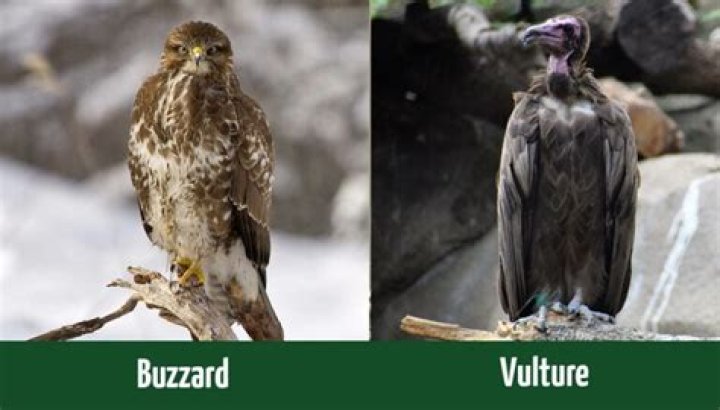
When it comes to raptors, the terms "buzzard" and "vulture" are often used interchangeably, but they refer to distinct species with unique characteristics. Understanding the difference between buzzards and vultures is essential for bird enthusiasts, wildlife researchers, and anyone interested in the natural world. This article aims to provide a detailed exploration of these fascinating birds, shedding light on their physical traits, behaviors, and ecological roles.
Both buzzards and vultures play critical roles in maintaining ecological balance, but they differ significantly in terms of their appearance, feeding habits, and habitats. By exploring these differences, we can gain a deeper appreciation for the diversity of avian life and the vital functions they perform in nature.
This article will delve into the nuances of these two bird groups, offering insights into their evolutionary history, physical characteristics, and behavioral patterns. Whether you're a seasoned ornithologist or simply curious about wildlife, this guide will equip you with the knowledge to distinguish between buzzards and vultures confidently.
Biological Classification and Overview
The distinction between buzzards and vultures begins with their biological classification. Buzzards belong to the family Accipitridae, which also includes eagles, hawks, and kites. Vultures, on the other hand, are divided into two main groups: Old World vultures (family Accipitridae) and New World vultures (family Cathartidae). Despite sharing some similarities, these groups have evolved independently, resulting in distinct characteristics.
Key Differences in Classification
- Buzzards are part of the genus Buteo, which includes medium to large birds of prey.
- Old World vultures share a closer evolutionary link with buzzards, while New World vultures have evolved separately and are more closely related to storks.
- Vultures are primarily scavengers, whereas buzzards are opportunistic hunters that consume both live prey and carrion.
Physical Characteristics of Buzzards and Vultures
One of the most apparent differences between buzzards and vultures lies in their physical appearance. While both are large birds of prey, their body structures and plumage reflect their distinct ecological roles.
Buzzard Physical Traits
Buzzards are characterized by their robust build, broad wings, and relatively short tails. Their feathers are typically brown or gray, with intricate patterns that provide camouflage in various environments. Buzzards have strong, curved beaks and sharp talons, adapted for hunting and tearing flesh.
Vulture Physical Traits
Vultures, especially Old World species, often have bald heads and necks, which help them stay clean while feeding on carrion. New World vultures also exhibit baldness, but their heads are often brightly colored. Their wings are longer and broader than those of buzzards, enabling efficient soaring over vast distances in search of food.
Feeding Habits and Diet
The feeding habits of buzzards and vultures highlight another significant difference between these birds. Buzzards are versatile predators, capable of hunting small mammals, birds, reptiles, and insects. They rely on their keen eyesight and agility to capture live prey.
Vulture Feeding Behavior
In contrast, vultures are specialized scavengers that feed primarily on carrion. Their strong beaks and digestive systems allow them to break down decaying flesh and even bones. Some species, like the Andean condor, can consume large carcasses, while smaller vultures focus on medium-sized animals.
Habitat and Distribution
Buzzards and vultures inhabit different regions of the world, although there is some overlap in their ranges. Buzzards are commonly found in Europe, Asia, and North America, where they thrive in open woodlands, grasslands, and agricultural areas.
Vulture Habitats
Vultures are more widespread, with Old World species dominating Africa, Asia, and Europe, while New World vultures are native to the Americas. They are particularly abundant in open savannas, deserts, and mountainous regions, where they can spot carrion from great distances.
Behavioral Differences
The behavior of buzzards and vultures reflects their respective ecological niches. Buzzards are solitary hunters, often perching on elevated positions to scan for prey. They use stealth and speed to ambush their targets.
Vulture Social Behavior
Vultures, by contrast, are highly social birds that often gather in large groups around carcasses. This cooperative behavior helps them maximize their feeding opportunities while minimizing competition from other scavengers.
Evolutionary History and Adaptations
The evolutionary paths of buzzards and vultures have shaped their unique characteristics. Buzzards, as members of the Accipitridae family, share a common ancestry with other raptors, evolving traits suited for active hunting.
Vulture Evolution
Vultures, particularly New World species, have undergone convergent evolution, developing features that enhance their scavenging abilities. Their bald heads, for example, are an adaptation to prevent contamination from carrion. Additionally, many vultures possess an acute sense of smell, which aids in locating food sources.
Ecological Importance
Both buzzards and vultures play vital roles in maintaining ecosystem health. Buzzards contribute to population control by preying on smaller animals, while vultures serve as nature's cleanup crew, preventing the spread of diseases by consuming carrion.
Impact of Vultures on Public Health
Vultures are particularly important in preventing the proliferation of disease-carrying organisms. In areas where vulture populations have declined, there has been a noticeable increase in scavenging by feral dogs, which can lead to higher incidences of rabies and other zoonotic diseases.
Conservation Status and Threats
Despite their ecological importance, both buzzards and vultures face numerous threats in the wild. Habitat loss, pesticide use, and human-wildlife conflict are significant challenges for buzzard populations.
Threats to Vultures
Vultures, especially in Asia and Africa, are among the most endangered bird groups. Poisoning, often caused by the ingestion of livestock carcasses treated with veterinary drugs like diclofenac, has decimated vulture populations. Conservation efforts, such as breeding programs and awareness campaigns, are crucial for their survival.
Myths and Misconceptions
There are several misconceptions surrounding buzzards and vultures that need clarification. For instance, the belief that vultures always circle dying animals is a myth; they rely on sight and smell to locate food.
Buzzard Misconceptions
Similarly, buzzards are sometimes mistakenly labeled as pests due to their scavenging behavior. However, they are valuable predators that help maintain ecological balance.
Comparison Table
| Feature | Buzzards | Vultures |
|---|---|---|
| Family | Accipitridae | Accipitridae (Old World), Cathartidae (New World) |
| Feeding Habits | Omnivorous hunters | Specialized scavengers |
| Habitat | Woodlands, grasslands | Savannas, deserts, mountains |
| Physical Traits | Broad wings, strong talons | Bald heads, long wings |
Kesimpulan
In summary, understanding the difference between buzzards and vultures involves recognizing their distinct biological classifications, physical characteristics, feeding habits, and ecological roles. Both groups are vital components of the natural world, contributing to ecological balance and public health.
We encourage readers to share this article and explore further resources to deepen their knowledge of these remarkable birds. By supporting conservation efforts and dispelling myths, we can ensure the survival of buzzards and vultures for future generations.
For more insights into wildlife and conservation, check out our other articles and join the conversation in the comments section below!
Data Sources:
- International Union for Conservation of Nature (IUCN) Red List
- The Cornell Lab of Ornithology
- World Wildlife Fund (WWF)