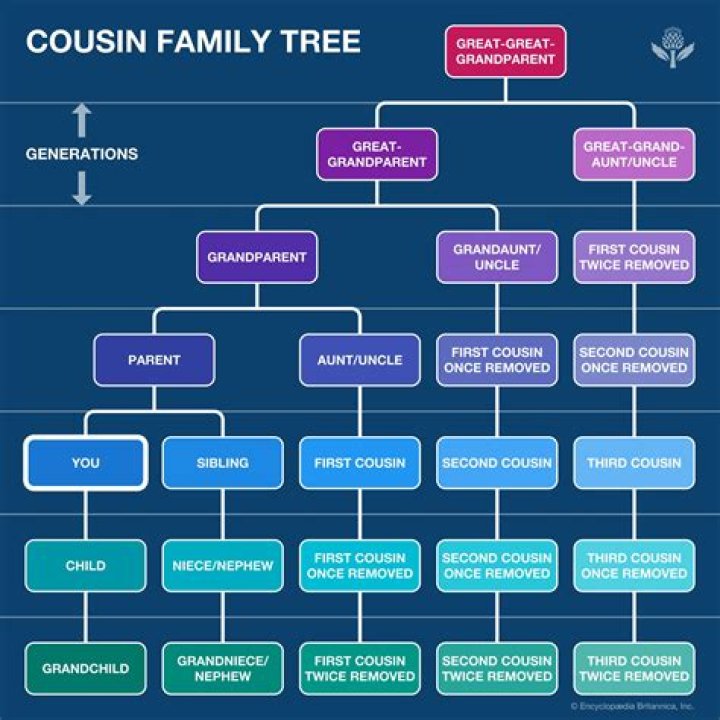
Understanding the concept of second cousin is essential for anyone interested in genealogy, family history, or simply wanting to clarify familial relationships. The term "second cousin" refers to individuals who share the same great-grandparents but are not siblings or first cousins. In this article, we will delve into the intricacies of second cousin relationships, offering clarity and context to help you better grasp this concept.
Family relationships can often become confusing, especially as you move further away from immediate family members. This article aims to simplify the concept of second cousins and provide a deeper understanding of how these relationships fit into the broader context of genealogy. Whether you're exploring your ancestry or simply want to understand your family tree better, this guide will prove invaluable.
We will explore the second cousin definition, its relevance in family structures, and how it applies in various cultural and legal contexts. By the end of this article, you will have a clear understanding of what it means to be a second cousin and how this relationship fits into the larger family dynamic.
What is a Second Cousin? Definition and Overview
A second cousin is someone with whom you share the same great-grandparents but not the same grandparents. This means that your parents and your second cousin's parents are first cousins. Understanding this relationship requires a basic understanding of how family trees work and how generations are connected.
For example, if your great-grandparents had multiple children who went on to have their own families, the children of those siblings would be first cousins. The children of those first cousins are second cousins. This generational connection forms the basis of second cousin relationships.
Key Characteristics of Second Cousin Relationships
- Second cousins share the same great-grandparents.
- Parents of second cousins are first cousins.
- This relationship spans three generations of separation.
These characteristics help define the second cousin relationship and distinguish it from other familial connections. Understanding these distinctions is crucial for anyone exploring genealogy or family history.
How to Identify Second Cousins in Your Family Tree
Identifying second cousins in your family tree involves tracing back through generations to find common ancestors. By understanding the structure of your family tree, you can pinpoint second cousin relationships with greater accuracy.
Steps to Identify Second Cousins
- Start by identifying your great-grandparents.
- Find out who their children were (your grandparents' siblings).
- Locate the children of those siblings (your parents' first cousins).
- The children of those first cousins are your second cousins.
This step-by-step process simplifies the identification of second cousins, making it easier to map out your family tree and understand your extended family relationships.
Second Cousin Definition in Genealogy
In genealogy, the second cousin definition plays a crucial role in mapping family relationships. Genealogists use specific terms and definitions to ensure accuracy and consistency when documenting family histories. Understanding the second cousin relationship is particularly important for those researching their ancestry.
Genealogical records often include detailed charts and diagrams to illustrate family connections. These tools help clarify relationships such as second cousins, making it easier for researchers to identify and document familial ties.
Genealogical Tools for Identifying Second Cousins
- Family trees: Visual representations of family relationships.
- Ancestral charts: Detailed diagrams showing generational connections.
- Genealogical software: Programs designed to organize and analyze family data.
These tools are invaluable for anyone serious about tracing their family history and identifying second cousin relationships.
Cultural Perspectives on Second Cousins
Cultural perspectives on second cousins can vary significantly across different societies. In some cultures, extended family relationships hold great importance, while in others, the focus may be more on immediate family members. Understanding these cultural differences can provide deeper insights into the significance of second cousin relationships.
Examples of Cultural Views on Second Cousins
- In many Asian cultures, extended family relationships are highly valued, and second cousins may play an active role in family gatherings and ceremonies.
- In Western cultures, second cousin relationships may not be as emphasized, with a greater focus on immediate family members.
- In some indigenous cultures, second cousins may be considered part of an extended kinship network, playing important roles in community and tribal affairs.
These cultural variations highlight the diverse ways in which second cousin relationships are perceived and valued around the world.
Legal Implications of Second Cousin Relationships
Second cousin relationships can have legal implications, particularly in areas such as inheritance, marriage laws, and adoption. Understanding these legal aspects is essential for anyone navigating complex family situations or legal matters involving extended family members.
Key Legal Considerations for Second Cousins
- Inheritance laws: Second cousins may have rights to inherit property or assets under certain circumstances.
- Marriage laws: In some jurisdictions, second cousins are permitted to marry, while in others, there may be restrictions.
- Adoption: Second cousins may be considered in adoption processes, depending on legal regulations.
These legal considerations underscore the importance of understanding second cousin relationships in a broader societal context.
Second Cousin vs. First Cousin: Understanding the Difference
While both second and first cousins share common ancestors, the degree of separation between them differs significantly. First cousins share the same grandparents, while second cousins share the same great-grandparents. This distinction is crucial for accurately identifying family relationships.
Comparing First and Second Cousins
- First cousins: Parents are siblings.
- Second cousins: Parents are first cousins.
By understanding these differences, you can better navigate your family tree and accurately identify relationships within your extended family.
Common Misconceptions About Second Cousins
Misconceptions about second cousins can lead to confusion and misunderstandings about family relationships. Clarifying these misconceptions is essential for anyone seeking to understand their extended family connections.
Addressing Common Misconceptions
- Myth: Second cousins are not related. Reality: Second cousins share the same great-grandparents.
- Myth: Second cousins are the same as first cousins once removed. Reality: These are distinct relationships with different generational connections.
By addressing these misconceptions, we can foster a clearer understanding of second cousin relationships and their place in family structures.
Exploring Second Cousin Relationships in Literature and Media
Second cousin relationships have been explored in various forms of literature and media, offering diverse perspectives on these familial connections. From classic novels to modern films, the portrayal of second cousins in storytelling provides valuable insights into how these relationships are perceived and depicted.
Examples of Second Cousin Relationships in Literature
- In Jane Austen's novels, second cousin relationships are often highlighted, showcasing the intricate web of family connections in 19th-century England.
- Modern films and television series frequently depict second cousin relationships, adding depth and complexity to character dynamics.
These portrayals help to enrich our understanding of second cousin relationships and their significance in storytelling.
Practical Tips for Tracing Second Cousin Relationships
Tracing second cousin relationships requires a systematic approach and access to reliable resources. Here are some practical tips to help you navigate this process effectively:
Steps for Tracing Second Cousin Relationships
- Begin with your immediate family and work backward through generations.
- Utilize online genealogical databases and resources to gather information.
- Interview older family members for insights into family history and connections.
- Document findings in a family tree or genealogical chart for easy reference.
These steps will help you systematically trace and identify second cousin relationships within your family.
Conclusion
In conclusion, understanding the second cousin definition is essential for anyone interested in genealogy, family history, or clarifying familial relationships. By exploring the intricacies of second cousin relationships, we gain valuable insights into how families are connected across generations.
We encourage you to take action by tracing your own family tree and identifying second cousin relationships within your extended family. Share your findings with others and contribute to the growing body of knowledge about family connections. For more information on genealogy and family history, explore our other articles and resources.