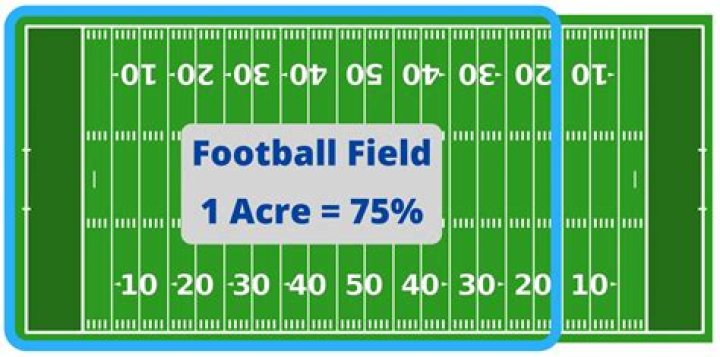
Understanding the square dimensions of an acre is crucial for anyone involved in land measurement, real estate, agriculture, or construction. Whether you're a professional or a homeowner, knowing how to calculate and interpret these dimensions can significantly impact your decisions. This article dives deep into the concept, offering clear explanations, practical examples, and valuable insights.
An acre is a standard unit of land measurement used primarily in the United States, the United Kingdom, and other countries that follow the imperial system. It represents a specific area of land, but many people struggle to visualize its square dimensions. By the end of this article, you'll have a thorough understanding of what an acre entails and how to calculate its dimensions accurately.
This guide is designed to cater to both beginners and experts, ensuring that everyone can grasp the concept of an acre's square dimensions. We'll explore its historical significance, mathematical calculations, and real-world applications. Let's get started!
What is an Acre?
An acre is a unit of land measurement that has been in use for centuries. Originally, it was defined as the area of land that could be plowed by a yoke of oxen in one day. Today, an acre is standardized as 43,560 square feet. This unit is widely used in agriculture, real estate, and land development.
Origins of the Acre
The term "acre" dates back to medieval England, where it was tied to agricultural practices. Over time, the definition evolved to become a fixed measurement. Understanding its origins helps appreciate its significance in modern contexts.
Square Dimensions of an Acre
The square dimensions of an acre refer to the length and width of a rectangular plot of land that equals one acre. While an acre can take various shapes, the most common representation is a square or rectangle. Let's explore this concept further.
Visualizing an Acre
- A perfect square acre would measure approximately 208.71 feet by 208.71 feet.
- However, an acre can also be rectangular, with dimensions such as 150 feet by 290.4 feet.
- The key is that the total area must equal 43,560 square feet.
Calculating Acre Dimensions
Calculating the square dimensions of an acre involves basic arithmetic. To determine the length and width of a rectangular plot, you need to divide the total area (43,560 square feet) by one of the dimensions. Here's how:
Step-by-Step Calculation
- Decide on one dimension (length or width).
- Divide 43,560 by the chosen dimension to find the other dimension.
- Verify that the product of the two dimensions equals 43,560.
Variations in Acre Sizes
While the standard acre is 43,560 square feet, variations exist in different regions. For example, commercial acres in some cities may exclude roadways or sidewalks, resulting in slightly smaller areas. Understanding these variations is essential for accurate land measurement.
Regional Differences
In the United States, the international acre is the most commonly used. However, other countries may have their own definitions, such as the Irish acre or the Scottish acre. Always verify the specific definition when dealing with international transactions.
Common Uses of Acres
Acres are widely used in various industries. Here are some of the most common applications:
- Agriculture: Farmers use acres to measure the size of their fields and calculate crop yields.
- Real Estate: Homeowners and developers rely on acres to assess property sizes and values.
- Conservation: Environmentalists use acres to track land preservation efforts.
Converting Acres to Other Units
Converting acres to other units of measurement is a common task. Here are some useful conversions:
- 1 acre = 43,560 square feet
- 1 acre = 4,840 square yards
- 1 acre = 0.404686 hectares
Conversion Tools
Several online tools and apps can help with these conversions. For precise calculations, especially in professional settings, it's recommended to use reliable software or consult a land surveyor.
Practical Applications
Understanding the square dimensions of an acre has numerous practical applications. For instance, it can help in planning a garden, designing a housing development, or estimating the cost of landscaping. Let's explore some real-world scenarios:
Example Scenarios
- Gardening: If you're planning a vegetable garden, knowing the dimensions of an acre can help you allocate space efficiently.
- Construction: Developers use acre measurements to design subdivisions and calculate building densities.
- Environmental Projects: Conservationists use acres to measure the impact of reforestation or wetland restoration projects.
Historical Background
The concept of an acre has a rich history. Originally, it was tied to agricultural practices in medieval Europe. Over time, it evolved into a standardized unit of measurement. Learning about its history provides context for its modern usage.
Key Historical Facts
- The word "acre" derives from the Old English word "æcer," meaning "open field."
- It was initially defined as the area that could be plowed in a single day using a team of oxen.
- Standardization occurred in the 19th century with the introduction of the imperial system.
Frequently Asked Questions
Q: How many square feet are in an acre?
A: There are 43,560 square feet in an acre.
Q: Can an acre be any shape?
A: Yes, an acre can take various shapes, but the total area must equal 43,560 square feet.
Q: How do I measure an acre on my property?
A: You can measure an acre by calculating the total area of your property in square feet and dividing it by 43,560.
Conclusion
In conclusion, understanding the square dimensions of an acre is essential for anyone involved in land-related activities. From agriculture to real estate, this knowledge empowers you to make informed decisions. By following the calculations and practical examples outlined in this article, you can confidently work with acre measurements.
We encourage you to share this article with others who might find it useful. If you have any questions or insights, please leave a comment below. Additionally, explore our other resources for more information on land measurement and related topics. Together, let's deepen our understanding of the world around us!