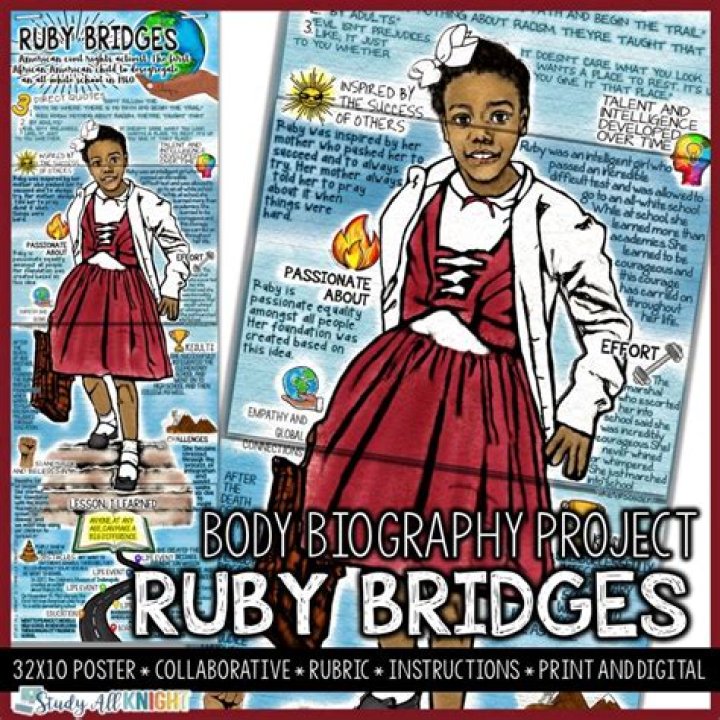
Ruby Bridges became a symbol of the Civil Rights Movement when, at just six years old, she became one of the first African American children to desegregate an all-white elementary school in the South. Her journey was not only a personal struggle but a pivotal moment in American history that challenged the racial segregation entrenched in the education system.
Ruby's story is one of immense bravery and determination, as she faced daily threats and hostility simply for attending school. Her actions paved the way for millions of African American children to gain access to quality education, making her an enduring symbol of the fight for equality and justice.
This article delves into Ruby Bridges' life, her role in the Civil Rights Movement, and the lasting impact of her actions. We will explore her early life, the challenges she faced, and how her story continues to inspire generations today.
Biography of Ruby Bridges
Ruby Bridges' Early Life
Ruby Nell Bridges was born on September 8, 1954, in Tylertown, Mississippi. She grew up in a humble farming family, with her parents working as sharecroppers. At the age of four, Ruby and her family moved to New Orleans, Louisiana, in search of better opportunities. Her early years were shaped by the racial segregation that dominated the South during the 1950s.
Ruby's life changed dramatically when she was selected to take a test that would determine whether she could attend an all-white school as part of the desegregation efforts mandated by the Supreme Court's Brown v. Board of Education ruling in 1954.
| Full Name | Ruby Nell Bridges |
|---|---|
| Birthdate | September 8, 1954 |
| Place of Birth | Tylertown, Mississippi |
| Profession | Civil Rights Activist |
Early Life and Background
Growing up in the Deep South during the height of segregation, Ruby experienced firsthand the inequalities that African Americans faced. Schools, public facilities, and even water fountains were divided based on race. Despite these challenges, Ruby's parents instilled in her a sense of resilience and the importance of education.
In 1960, Ruby's family received a letter from the National Association for the Advancement of Colored People (NAACP) inviting her to take a test that would determine her eligibility to attend an all-white school. Ruby passed the test, and her name was added to a list of students who would participate in the desegregation effort.
Desegregation and Ruby's Role
Ruby Bridges and the Integration of William Frantz Elementary School
On November 14, 1960, six-year-old Ruby Bridges made history by walking into William Frantz Elementary School in New Orleans, Louisiana. Surrounded by federal marshals for protection, Ruby became the first African American child to attend an all-white elementary school in the South.
Her presence at the school sparked protests, boycotts, and acts of violence from those opposed to desegregation. Despite the hostility, Ruby attended school every day, often spending her time alone in a classroom with her teacher, Mrs. Barbara Henry.
Challenges Faced by Ruby Bridges
Hostility and Threats
Ruby faced immense challenges during her first year at William Frantz Elementary School. Angry mobs gathered outside the school daily, shouting threats and hurling insults. Some protesters even displayed a black doll in a coffin to intimidate her. Despite the fear and uncertainty, Ruby remained steadfast, drawing strength from her faith and family.
Beyond the physical threats, Ruby also experienced emotional isolation. Many white parents withdrew their children from the school, leaving Ruby as the only student in her classroom. Her teacher, Mrs. Henry, became a crucial source of support, providing both academic and emotional guidance.
The Impact of Ruby Bridges on the Civil Rights Movement
A Catalyst for Change
Ruby Bridges' bravery inspired countless others to join the fight for civil rights. Her actions challenged the institutionalized racism that permeated American society and highlighted the importance of education as a tool for equality. Ruby's story became a symbol of hope and resilience, demonstrating that even the youngest voices could effect significant change.
Her journey also brought attention to the broader struggles of the Civil Rights Movement, encouraging activists and leaders to push for further desegregation efforts across the country.
Legacy and Recognition
Ruby Bridges' legacy continues to inspire generations. In 1999, she founded the Ruby Bridges Foundation, which promotes tolerance, respect, and appreciation for all differences through education and community involvement. Her story has been immortalized in books, films, and artworks, including a famous Norman Rockwell painting titled "The Problem We All Live With."
Ruby has received numerous awards and honors for her contributions to civil rights, including the Presidential Citizens Medal awarded by President Bill Clinton in 2001.
Ruby Bridges and Modern-Day Civil Rights
The Continuing Fight for Equality
Today, Ruby Bridges remains an active advocate for civil rights and education reform. She speaks to audiences around the world, sharing her story and emphasizing the importance of standing up for what is right. Her work highlights the ongoing need for equality and justice in education and society as a whole.
As the world continues to grapple with issues of race and inequality, Ruby's message of courage and perseverance serves as a powerful reminder of the progress that can be achieved through determination and unity.
The Role of Education in the Civil Rights Movement
Education played a central role in the Civil Rights Movement, serving as both a battleground and a catalyst for change. The desegregation of schools was a critical step toward achieving equal opportunities for African Americans. Ruby Bridges' story exemplifies the transformative power of education and the sacrifices made to ensure access to quality learning for all.
Efforts to desegregate schools were part of a larger movement that sought to dismantle systemic racism and promote equality in all aspects of life. The success of these efforts laid the groundwork for future advancements in civil rights.
Conclusion
Ruby Bridges' journey as a six-year-old girl who courageously integrated an all-white school is a testament to the power of one individual to inspire change. Her story highlights the importance of education, resilience, and the fight for equality. Through her actions, Ruby became a symbol of hope and progress during a pivotal moment in American history.
We invite you to share your thoughts and reflections on Ruby Bridges' story in the comments below. Consider exploring other articles on our site that delve into the history and impact of the Civil Rights Movement. Together, we can continue to honor the legacy of those who fought for justice and equality.