Cooking is an art that combines creativity with science, and understanding the nuances of different cooking methods is essential for every home chef. Whether you're preparing a succulent roast chicken, baking a perfect loaf of bread, or broiling a juicy steak, the method you choose plays a critical role in the final outcome of your dish. This article will delve deep into the differences between roast, bake, and broil, helping you make informed decisions in the kitchen.
Understanding the distinctions between these cooking techniques can significantly enhance your culinary skills. Each method brings unique characteristics to your food, affecting texture, flavor, and cooking time. From the gentle heat of baking to the intense sear of broiling, every technique has its place in the kitchen.
This guide aims to provide you with a thorough understanding of roast vs bake vs broil, including their definitions, ideal uses, and tips for perfect execution. By the end of this article, you'll have the knowledge to confidently choose the right method for any recipe.
What is Roasting?
Roasting is a dry-heat cooking method that uses hot air to cook food, typically at higher temperatures. This technique is ideal for large cuts of meat, vegetables, and poultry. The high heat helps develop a flavorful crust on the outside while ensuring the inside remains tender and juicy.
Characteristics of Roasting
Roasting is known for its ability to enhance the natural flavors of food. Here are some key characteristics:
- High Temperature: Typically ranges from 300°F to 450°F (150°C to 230°C).
- Browning Effect: Promotes the Maillard reaction, which creates a rich, savory flavor.
- Longer Cooking Time: Suitable for larger cuts of meat that require extended cooking.
Roasting is often used for dishes like roasted chicken, beef roasts, and root vegetables. It's a versatile method that can be adapted to various recipes, making it a staple in many kitchens.
What is Baking?
Baking is another dry-heat cooking method, but it differs from roasting in its application and temperature range. Baking is commonly used for bread, pastries, and casseroles. The lower and more consistent heat ensures even cooking, making it perfect for delicate items.
Key Aspects of Baking
Baking requires precision and control to achieve the desired results. Below are some important aspects:
- Consistent Heat: Typically ranges from 250°F to 400°F (120°C to 200°C).
- Moisture Retention: Helps maintain the soft texture of baked goods.
- Precision Timing: Overbaking can lead to dryness, so timing is crucial.
Whether you're baking a batch of cookies or a savory quiche, understanding the nuances of this method will help you achieve consistent results every time.
What is Broiling?
Broiling is a high-heat cooking method that uses direct heat from above to cook food quickly. This technique is perfect for dishes that require a quick sear, such as steaks, chops, and fish. The intense heat creates a flavorful crust while keeping the interior tender.
Benefits of Broiling
Broiling is ideal for dishes that benefit from a quick, intense heat. Here are some benefits:
- Fast Cooking: Ideal for thin cuts of meat or vegetables that cook quickly.
- Flavorful Crust: Creates a delicious caramelized exterior.
- Versatile: Can be used for a variety of foods, including tofu and seafood.
While broiling is a powerful technique, it requires careful attention to prevent overcooking. Proper placement of the food under the broiler is essential for even cooking.
Temperature Differences
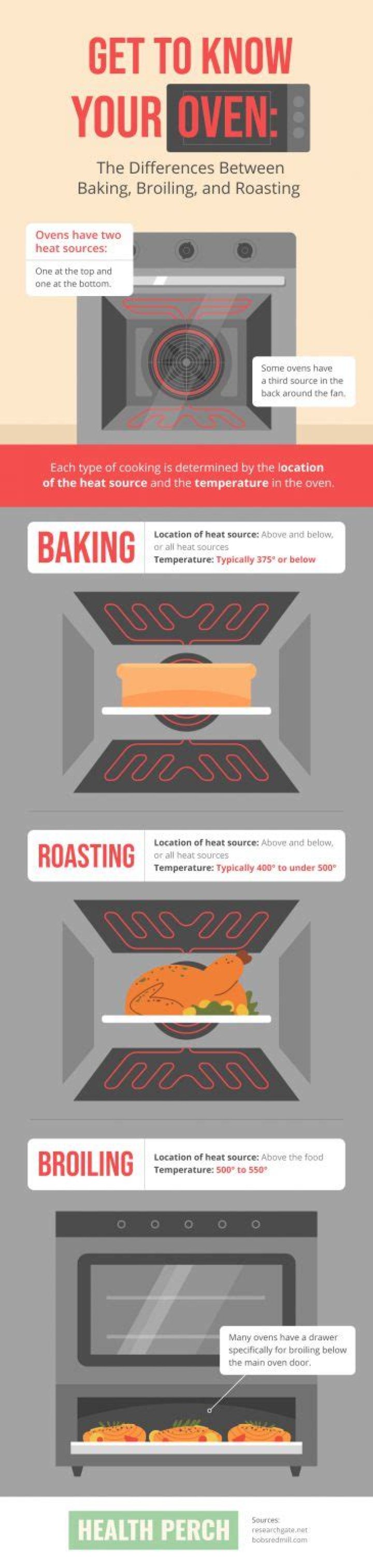
One of the primary distinctions between roast, bake, and broil lies in the temperature range used for each method. Understanding these differences can help you choose the right technique for your recipe.
Temperature Ranges
- Roasting: 300°F to 450°F (150°C to 230°C)
- Baking: 250°F to 400°F (120°C to 200°C)
- Broiling: 500°F to 550°F (260°C to 290°C)
The higher temperatures used in roasting and broiling are ideal for developing flavor through browning, while baking's moderate heat ensures even cooking without burning.
Cooking Time Considerations
Cooking time is another critical factor to consider when choosing between roast, bake, and broil. Each method has its own timeline, depending on the type of food and desired outcome.
Timeframes for Each Method
- Roasting: Typically requires 30 minutes to several hours, depending on the size of the food.
- Baking: Generally takes 10 to 60 minutes, depending on the recipe.
- Broiling: Usually only takes a few minutes, as the high heat cooks food quickly.
For example, roasting a whole turkey may take several hours, while broiling a salmon fillet can be done in under 10 minutes. Knowing these timeframes helps you plan your meals efficiently.
Ideal Foods for Each Method
Choosing the right cooking method depends largely on the type of food you're preparing. Each technique excels with specific ingredients, so it's important to match the method to the dish.
Best Foods for Roasting
- Poultry
- Beef roasts
- Root vegetables
Best Foods for Baking
- Bread
- Cakes
- Pastries
Best Foods for Broiling
- Steaks
- Fish fillets
- Tofu
Selecting the appropriate method ensures that your food is cooked to perfection, enhancing both flavor and texture.
Equipment Needed
The equipment you use can significantly impact the success of your cooking. Each method requires specific tools to achieve the best results.
Essential Tools for Roasting
- Roasting pan
- Meat thermometer
- Trivet or rack
Essential Tools for Baking
- Baking sheets
- Muffin tins
- Cake pans
Essential Tools for Broiling
- Broiler pan
- Tongs
- Thermal gloves
Investing in quality equipment can make a noticeable difference in your cooking experience and the final results of your dishes.
Tips for Success
To ensure your cooking endeavors are successful, here are some tips for mastering roast, bake, and broil:
Roasting Tips
- Use a meat thermometer to check internal temperature.
- Baste the food occasionally to keep it moist.
- Let the meat rest before slicing to allow juices to redistribute.
Baking Tips
- Preheat your oven to ensure consistent heat.
- Measure ingredients accurately for precise results.
- Rotate baking sheets halfway through cooking for even browning.
Broiling Tips
- Position food at the correct distance from the broiler element.
- Keep a close eye on the food to prevent burning.
- Use a broiler pan for optimal heat distribution.
By following these tips, you can elevate your cooking skills and achieve restaurant-quality results at home.
Comparison: Roast vs Bake vs Broil
To summarize the differences between roast, bake, and broil, here's a quick comparison:
- Roasting: High heat, longer cooking time, ideal for large cuts of meat and vegetables.
- Baking: Moderate heat, even cooking, perfect for bread, pastries, and casseroles.
- Broiling: Intense heat, quick cooking, great for searing steaks and fish.
Each method offers unique advantages, and understanding their differences allows you to choose the best technique for your recipe.
Conclusion
In conclusion, mastering the art of roast vs bake vs broil can significantly enhance your culinary skills. Each method brings its own set of benefits and challenges, making them indispensable in the kitchen. By understanding the temperature ranges, ideal foods, and equipment needed for each technique, you can confidently tackle any recipe.
We encourage you to experiment with these methods and share your experiences in the comments below. Your feedback helps us improve and provides valuable insights for other readers. Additionally, don't forget to explore more articles on our site for further culinary inspiration.
Remember, cooking is a journey of discovery, and every dish you create is a step toward becoming a better chef. Happy cooking!




