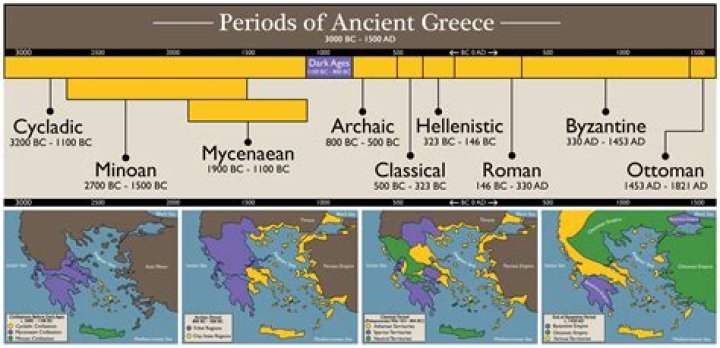
Periods in ancient Greece represent a fascinating journey through one of the most influential civilizations in human history. From the rise of city-states to the flourishing of philosophy, art, and democracy, ancient Greece has left an indelible mark on modern society. Understanding the various periods in ancient Greece is essential for anyone interested in history, culture, and human development.
The ancient Greek civilization spanned several centuries and can be divided into distinct periods, each marked by unique characteristics, achievements, and challenges. These periods not only shaped Greece but also laid the foundation for Western civilization as we know it today.
This comprehensive guide will delve into the different periods of ancient Greece, exploring their significance, cultural contributions, and lasting legacies. Whether you're a history enthusiast or simply curious about the origins of modern thought, this article will provide valuable insights into the fascinating world of ancient Greece.
Prehistoric Greece and the Minoan Civilization
Before the emergence of the classical Greek world, prehistoric Greece was home to some of the earliest advanced civilizations in Europe. Among these, the Minoan civilization stands out as one of the most remarkable.
Key Characteristics of the Minoan Civilization
Located on the island of Crete, the Minoans thrived between 2700 BCE and 1450 BCE. They are known for their impressive architecture, vibrant art, and advanced trade networks. Some of the notable features of the Minoan civilization include:
- Palace complexes such as Knossos, Phaistos, and Malia
- Elaborate frescoes depicting daily life and religious rituals
- A strong emphasis on maritime trade and commerce
Archaeological evidence suggests that the Minoans had a sophisticated understanding of engineering and urban planning. Their decline, however, remains a subject of debate among historians, with theories ranging from natural disasters to invasions.
The Mycenaean Period: A Golden Age of Early Greece
Following the decline of the Minoan civilization, the Mycenaean period (1600–1100 BCE) emerged as the first advanced civilization on mainland Greece. This era is often associated with the legendary figures of Greek mythology, including Agamemnon and Achilles.
Cultural Achievements of the Mycenaeans
The Mycenaeans were known for their:
- Impressive fortifications, such as the Lion Gate at Mycenae
- Development of Linear B script, an early form of Greek writing
- Rich tombs filled with gold and precious artifacts
Despite their achievements, the Mycenaean civilization eventually collapsed, marking the beginning of the Greek Dark Ages.
The Greek Dark Ages: A Time of Transition
The Greek Dark Ages (1100–800 BCE) were a period of decline and transformation following the collapse of the Mycenaean civilization. During this time, many cities were abandoned, literacy declined, and trade networks diminished.
However, this period also laid the groundwork for the later resurgence of Greek culture. Oral traditions, such as the epics of Homer, were developed during this time, preserving the stories and values of earlier generations.
The Archaic Period: Rise of the City-States
The Archaic period (800–480 BCE) marked a significant turning point in ancient Greek history. This era saw the rise of city-states (poleis), the development of democracy, and the flourishing of art and architecture.
Key Developments in the Archaic Period
Some of the notable achievements of this period include:
- The establishment of the Olympic Games in 776 BCE
- The creation of the first Greek temples, such as the Temple of Hera at Olympia
- The rise of prominent city-states like Athens, Sparta, and Corinth
The Archaic period also saw the emergence of Greek philosophy, with early thinkers such as Thales and Pythagoras laying the foundation for later intellectual traditions.
The Classical Period: The Golden Age of Greece
The Classical period (480–323 BCE) is often regarded as the "Golden Age" of ancient Greece. This era was marked by significant cultural, political, and military achievements, particularly in Athens under the leadership of Pericles.
Highlights of the Classical Period
Some of the most iconic achievements of this period include:
- The construction of the Parthenon and other monumental buildings
- The development of democracy in Athens
- The works of philosophers such as Socrates, Plato, and Aristotle
However, this period was not without conflict, as evidenced by the Peloponnesian War between Athens and Sparta. Despite these challenges, the Classical period remains a defining era in Greek history.
The Hellenistic Period: Alexander the Great's Legacy
The Hellenistic period (323–31 BCE) began with the death of Alexander the Great and the spread of Greek culture across his vast empire. This era saw the blending of Greek traditions with those of the Near East, Egypt, and other regions.
Characteristics of the Hellenistic World
Key features of the Hellenistic period include:
- The establishment of major cultural centers such as Alexandria and Pergamon
- Advances in science, mathematics, and medicine
- The rise of new philosophical schools, including Stoicism and Epicureanism
Although the Hellenistic kingdoms eventually fell to Roman conquest, their cultural legacy endured for centuries.
Art and Architecture in Ancient Greece
Art and architecture were integral to ancient Greek culture, reflecting their values, beliefs, and achievements. Greek art evolved significantly over time, from the geometric styles of the Archaic period to the realism and idealism of the Classical era.
Notable Architectural Achievements
Some of the most famous Greek architectural masterpieces include:
- The Parthenon, a temple dedicated to Athena
- The Temple of Zeus at Olympia
- The Theater of Dionysus in Athens
Greek art also encompassed sculpture, pottery, and painting, each contributing to the rich cultural tapestry of ancient Greece.
Philosophy and Intellectual Achievements
Ancient Greece is renowned for its contributions to philosophy, science, and intellectual thought. Thinkers such as Socrates, Plato, and Aristotle laid the foundations for Western philosophy, while scientists like Archimedes and Euclid made groundbreaking discoveries in mathematics and physics.
Major Philosophical Movements
Some of the most influential philosophical schools of ancient Greece include:
- Platonism, emphasizing the pursuit of truth and knowledge
- Stoicism, focusing on virtue and self-control
- Epicureanism, advocating for a life of pleasure and tranquility
These ideas continue to shape modern thought and inspire new generations of thinkers.
Society and Daily Life in Ancient Greece
The daily life of ancient Greeks varied depending on factors such as geography, social class, and gender. While city-states like Athens and Sparta had distinct social structures, certain aspects of Greek society were shared across the region.
Key Aspects of Greek Society
Some of the defining features of ancient Greek society include:
- The role of women and their limited rights
- Importance of education and athletic training
- Celebration of festivals and religious rituals
Understanding the social dynamics of ancient Greece provides valuable insights into their worldview and cultural priorities.
The Lasting Legacy of Ancient Greece
The influence of ancient Greece on modern civilization is profound and far-reaching. From democracy and philosophy to art and architecture, the contributions of this remarkable civilization continue to inspire and inform contemporary society.
Legacy in Modern Times
Some of the most enduring legacies of ancient Greece include:
- The foundations of Western democracy and governance
- Advances in science, medicine, and technology
- A rich cultural heritage preserved through art and literature
As we explore the periods in ancient Greece, we gain a deeper appreciation for the achievements and challenges faced by this extraordinary civilization.
Conclusion
In conclusion, the periods in ancient Greece represent a fascinating journey through one of history's most influential civilizations. From the prehistoric Minoans to the Hellenistic era, each period contributed unique cultural, political, and intellectual achievements that continue to shape our world today.
We invite you to engage with this content by leaving a comment or sharing your thoughts on social media. For further reading, explore our other articles on ancient civilizations and their lasting legacies. Together, let's continue to uncover the rich tapestry of human history.




