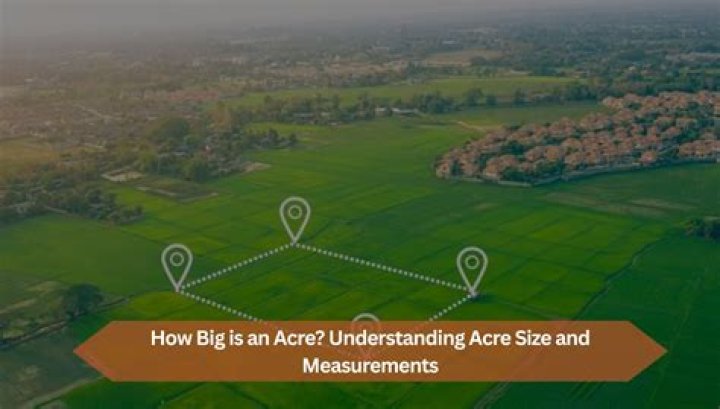
When it comes to land measurement, the term "acre" is one of the most commonly used units globally. Whether you're purchasing property, planning a garden, or involved in agricultural development, understanding the measurement of an acre is essential. This article will provide a comprehensive guide to the dimensions of an acre, its historical background, and practical applications in various industries.
The measurement of an acre is a fundamental concept for anyone dealing with land management, real estate, or agriculture. It is a standardized unit of land measurement that has been used for centuries. This article will explore the origins of the acre, how it is measured, and its significance in modern times.
By the end of this article, you will have a clear understanding of what constitutes an acre, its dimensions, and how it applies to real-world scenarios. Whether you're a beginner or an expert, this guide will provide valuable insights into the measurement of an acre.
History of the Acre
The concept of the acre dates back to medieval times, originating in England. Initially, an acre was defined as the area of land that could be plowed by a yoke of oxen in one day. Over time, this definition evolved into a standardized unit of measurement. Today, an acre is defined as a unit of land measuring 43,560 square feet.
Understanding the historical context of the acre helps us appreciate its significance in modern land measurement. The term "acre" is derived from the Old English word "æcer," meaning "open field." This historical background provides a foundation for its continued use in various industries.
For reference, the acre was officially standardized in the 19th century, ensuring consistency in land measurement across different regions. This standardization has made the acre a universally recognized unit of measurement.
Dimensions of an Acre
Standard Dimensions
An acre is a unit of land measurement that equals 43,560 square feet. While the shape of an acre can vary, its total area remains constant. For example, an acre can be rectangular, square, or even irregularly shaped, as long as the total area is 43,560 square feet.
One common representation of an acre is a rectangle measuring 660 feet by 66 feet, which is equivalent to one furlong by one chain. This configuration is often used in surveying and land mapping.
Visualizing an Acre
To help visualize an acre, imagine a football field without the end zones. This area is roughly equivalent to an acre. Additionally, an acre is approximately the size of 16 tennis courts or 75% of a standard American football field.
Understanding the dimensions of an acre is crucial for anyone involved in land management, agriculture, or real estate development.
Variations in Acre Measurements
While the standard acre is universally recognized, there are variations in acre measurements across different regions. For example, the Irish acre is slightly larger than the standard acre, measuring approximately 7,840 square yards. Similarly, the Scottish acre is also larger, measuring about 6,150 square yards.
These variations are important to consider when dealing with international land transactions or comparing land sizes across different countries. It is essential to clarify which type of acre is being referenced to avoid confusion.
Converting Acres to Other Units
Common Conversions
Converting acres to other units of measurement is a common task in various industries. Below are some standard conversions:
- 1 acre = 43,560 square feet
- 1 acre = 4,840 square yards
- 1 acre = 0.404686 hectares
- 1 acre = 0.0015625 square miles
These conversions are useful for comparing land sizes and understanding the scale of different properties.
Using Conversion Tools
Several online tools and calculators are available to simplify the conversion process. These tools allow users to input the size of a property in acres and instantly receive conversions to other units. This convenience is particularly helpful for real estate professionals and land surveyors.
Practical Applications of Acre Measurement
The measurement of an acre has numerous practical applications across various industries. In agriculture, understanding acreage is essential for planning crop yields, irrigation systems, and fertilizer applications. Similarly, in real estate, acreage plays a critical role in property valuation and development planning.
Additionally, acre measurement is crucial for environmental studies, such as calculating the carbon footprint of a forest or determining the biodiversity of a specific area. The versatility of the acre as a unit of measurement makes it indispensable in many fields.
Acre Measurement in Agriculture
Importance in Crop Planning
In agriculture, the measurement of an acre is vital for effective crop planning. Farmers use acreage to calculate the amount of seed, fertilizer, and water needed for a specific field. This information helps optimize resource allocation and maximize crop yields.
For example, a farmer planting corn might need to know how many acres of land are available to determine the quantity of seed required. This calculation ensures efficient use of resources and minimizes waste.
Technological Advancements
Modern technology has revolutionized acre measurement in agriculture. GPS systems and drone technology allow farmers to accurately measure land and monitor crop growth. These advancements have improved precision and efficiency in agricultural practices.
Acre Measurement in Real Estate
Property Valuation
In the real estate industry, acre measurement is a key factor in property valuation. Larger acreage typically corresponds to higher property values, especially in rural or suburban areas. Understanding the size of a property in acres helps buyers and sellers make informed decisions.
Real estate agents often use acreage to market properties, highlighting the potential for development or recreational use. This information is particularly valuable for buyers looking to build homes or invest in land.
Development Planning
For developers, acre measurement is essential for planning and zoning purposes. Zoning regulations often specify the minimum acreage required for certain types of development, such as residential subdivisions or commercial complexes. Accurate acre measurement ensures compliance with local regulations and facilitates successful project execution.
Legal Considerations in Acre Measurement
Legal considerations surrounding acre measurement are crucial for property transactions and land disputes. In many jurisdictions, property deeds include detailed descriptions of acreage, ensuring clarity and accuracy in land ownership. Discrepancies in acre measurement can lead to legal disputes, emphasizing the importance of precise measurement.
Surveyors play a vital role in resolving acreage disputes by providing accurate measurements and documentation. Their expertise ensures that property boundaries are clearly defined, reducing the risk of legal conflicts.
Technology and Acre Measurement
Advancements in technology have significantly enhanced the accuracy and efficiency of acre measurement. GPS systems, satellite imagery, and laser technology are now commonly used to measure large areas of land with precision. These tools have transformed the way land is surveyed and mapped, providing valuable data for various industries.
For example, satellite imagery can be used to monitor changes in land use over time, helping policymakers and environmentalists track deforestation or urban expansion. This technology has far-reaching implications for land management and conservation efforts.
The Future of Acre Measurement
As technology continues to evolve, the future of acre measurement looks promising. Innovations in artificial intelligence and machine learning may further enhance the accuracy and speed of land measurement. These advancements could revolutionize industries such as agriculture, real estate, and environmental science.
Additionally, the increasing focus on sustainability and climate change may lead to new applications for acre measurement. For example, calculating the carbon sequestration potential of forests or measuring the impact of urbanization on natural habitats. The versatility of the acre as a unit of measurement ensures its relevance in addressing global challenges.
Conclusion
In conclusion, the measurement of an acre is a fundamental concept with wide-ranging applications in various industries. From its historical origins to its modern-day uses, the acre remains a vital unit of land measurement. Understanding its dimensions, variations, and practical applications is essential for anyone involved in land management, agriculture, or real estate.
We invite you to explore more articles on our website for additional insights into land measurement and related topics. Feel free to leave a comment or share this article with others who may find it valuable. Together, we can deepen our understanding of the world around us and make informed decisions about land use and development.




