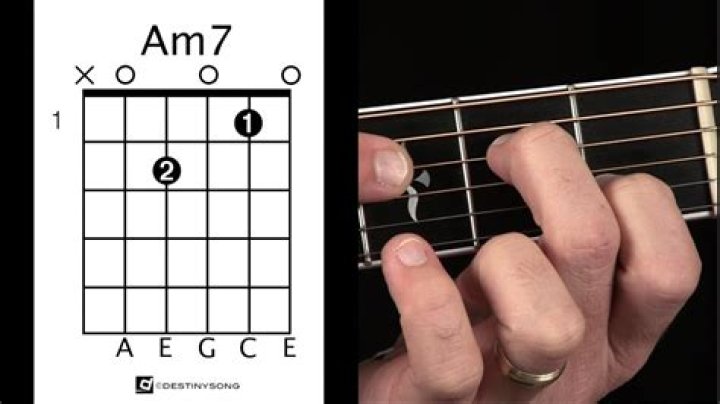
Am7 on guitar is one of the most versatile chords you can learn as a musician. Whether you're just starting out or looking to expand your chord vocabulary, this minor seventh chord plays a crucial role in creating rich, emotional sounds. In this article, we'll explore everything you need to know about Am7, including its structure, applications, and tips for mastering it like a pro.
Music is a powerful form of expression, and understanding chords like Am7 can elevate your playing to new heights. This chord is not only essential for jazz and blues but also finds its way into pop, rock, and classical music. By the end of this guide, you'll have a solid grasp of how Am7 works and how you can incorporate it into your repertoire.
Whether you're a beginner or an experienced guitarist, there's always room to grow. Let's dive into the world of Am7 and uncover the secrets that make it such a beloved chord in the musical universe.
What is Am7 on Guitar?
Am7, short for A minor seventh, is a chord that combines the melancholic tone of a minor chord with the smooth, jazzy quality of a seventh note. It's constructed by adding a minor seventh interval to the A minor triad, resulting in a chord that sounds both complex and soothing. This chord is widely used across various genres, making it a must-learn for any guitarist.
In music theory, Am7 is formed by playing the notes A, C, E, and G. These notes create a harmonic blend that resonates with listeners and adds depth to any piece of music. Whether you're strumming it in a ballad or plucking it in a jazz improvisation, Am7 has the power to transform your sound.
Understanding the Structure of Am7
Breaking Down the Notes
The structure of Am7 is based on the A minor scale. It consists of four primary notes:
- A (root note)
- C (minor third)
- E (perfect fifth)
- G (minor seventh)
Each of these notes plays a vital role in shaping the chord's unique sound. The minor third gives it its melancholic quality, while the minor seventh adds a touch of sophistication.
Chord Formula
Am7 follows the formula 1 - ♭3 - 5 - ♭7. This means:
- 1 represents the root note (A)
- ♭3 represents the minor third (C)
- 5 represents the perfect fifth (E)
- ♭7 represents the minor seventh (G)
Understanding this formula helps you apply the same principles to other minor seventh chords, making your learning process more efficient.
Common Uses of Am7 in Music
Am7 is incredibly versatile and can be found in a variety of musical contexts. It's commonly used in:
- Jazz: Jazz musicians love Am7 because of its rich, smooth sound. It often appears in progressions like ii-V-I, which are fundamental to jazz harmony.
- Blues: Blues guitarists use Am7 to add depth to their riffs and solos, creating a soulful atmosphere.
- Pop: Many pop songs incorporate Am7 to enhance emotional depth, especially in ballads and slower tunes.
- Rock: In rock music, Am7 can be used to soften the intensity of power chords or to add variety to chord progressions.
Its adaptability makes Am7 a staple in many guitarist's arsenals.
Fingering Techniques for Playing Am7
Playing Am7 on guitar requires proper finger positioning to ensure clarity and ease of execution. Here's a step-by-step guide:
- Place your first finger on the second fret of the D string.
- Place your second finger on the second fret of the G string.
- Place your third finger on the second fret of the B string.
- Mute the low E and A strings by lightly resting your fingers or avoiding strumming them.
Alternatively, you can play a barre chord version of Am7 by barring the fifth fret and adding the necessary fingers for the chord shape. This method is useful when transitioning between chords in a progression.
Am7 Chord Variations
Open Position Variations
Besides the standard Am7 shape, there are several open position variations you can explore:
- Am7 (no root): Omit the root note (A) for a lighter, more delicate sound.
- Am7sus4: Replace the third (C) with a perfect fourth (D) to create a suspended sound.
- Am7add9: Add the ninth note (B) for an extended, jazzy feel.
Barre Chord Variations
Barre chords allow you to play Am7 in different positions on the fretboard. Some popular barre chord shapes include:
- 5th Fret Shape: Use the E shape barre chord starting at the fifth fret.
- 7th Fret Shape: Use the A shape barre chord starting at the seventh fret.
Experimenting with these variations can help you discover new sounds and improve your chord vocabulary.
Tips for Practicing Am7
Mastery of Am7 requires consistent practice and attention to detail. Here are some tips to help you improve:
- Start Slow: Begin by playing the chord slowly to ensure each note rings clearly.
- Use a Metronome: Practice strumming Am7 in time with a metronome to develop rhythm and timing.
- Incorporate into Progressions: Practice Am7 in common progressions like Am7 - Dm7 - G7 - Cmaj7.
- Experiment with Techniques: Try fingerpicking, hybrid picking, or palm muting to add variety to your sound.
Consistent practice will build muscle memory and improve your overall technique.
Popular Songs Featuring Am7
Am7 is a staple in many iconic songs across different genres. Here are a few examples:
- "Yesterday" by The Beatles: This classic ballad features Am7 prominently in its progression.
- "Fly Me to the Moon" by Frank Sinatra: The jazz standard uses Am7 to create its smooth, romantic feel.
- "Stairway to Heaven" by Led Zeppelin: The song incorporates Am7 in its intricate acoustic guitar work.
- "Hallelujah" by Leonard Cohen: Am7 adds depth to the emotional chord progression in this timeless song.
Listening to these songs can inspire your playing and help you understand how Am7 fits into different musical contexts.
The Theory Behind Am7
Harmonic Function
In music theory, Am7 serves as the ii chord in the key of G major. This means it often functions as a subdominant chord, leading naturally to the V chord (D7) before resolving to the I chord (G major). Understanding its harmonic role can help you anticipate chord progressions and improvise more effectively.
Scale Relationships
Am7 is closely related to the A natural minor scale and the A melodic minor scale. By exploring these scales, you can unlock new melodic possibilities when playing over Am7 chords.
Benefits of Learning Am7
Mastering Am7 offers numerous benefits for guitarists:
- Enhanced Chord Vocabulary: Learning Am7 expands your chord library, allowing you to play a wider variety of songs.
- Improved Musical Expression: Am7 adds emotional depth to your playing, making your music more expressive and engaging.
- Foundation for Jazz and Improvisation: Understanding Am7 is essential for jazz guitarists and anyone interested in improvisation.
- Better Understanding of Music Theory: Studying Am7 helps you grasp fundamental concepts of harmony and chord construction.
Investing time in learning Am7 will pay dividends in your musical journey.
Conclusion: Mastering Am7 on Guitar
In conclusion, Am7 is a versatile and essential chord for guitarists of all levels. By understanding its structure, exploring its variations, and practicing consistently, you can incorporate this chord into your playing with confidence. Its applications span across multiple genres, making it a valuable tool in your musical arsenal.
We encourage you to take action by practicing Am7 regularly and experimenting with different techniques. Share your progress with fellow musicians, and don't hesitate to explore other chords and scales to further enrich your playing. If you found this guide helpful, consider exploring other articles on our site to deepen your knowledge of guitar and music theory.