In the world of nutrition and fitness, understanding energy units like kcal and cal is essential for maintaining a balanced lifestyle. These terms are often used interchangeably, but they carry distinct meanings that can significantly affect your health goals. Whether you're tracking calories for weight loss or muscle gain, knowing the difference between kcal and cal can make a substantial difference in your journey.
Energy measurement is at the core of nutrition science, and kcal and cal are two of the most commonly used units. Understanding these terms helps individuals make informed decisions about their dietary intake and energy expenditure. This article will delve into the intricacies of kcal and cal, their differences, and how they influence your daily life.
By the end of this article, you'll have a clear understanding of how to use these measurements effectively and confidently. Let's explore the world of kcal and cal and how they can help you achieve your health and fitness goals.
What is Cal?
The term "cal" refers to a calorie, which is a unit of energy. Specifically, a calorie (cal) is the amount of energy required to raise the temperature of one gram of water by one degree Celsius. This definition is fundamental in understanding how energy is measured in food and human activity.
History of the Calorie
The concept of the calorie originated in the 19th century when scientists began studying the relationship between food and energy. The calorie became a standard unit for measuring the energy content of food, laying the foundation for modern nutrition science.
Types of Calories
- Small Calorie (cal): The traditional definition of a calorie.
- Large Calorie (kcal): A thousand times larger than a small calorie, commonly used in nutrition.
What is Kcal?
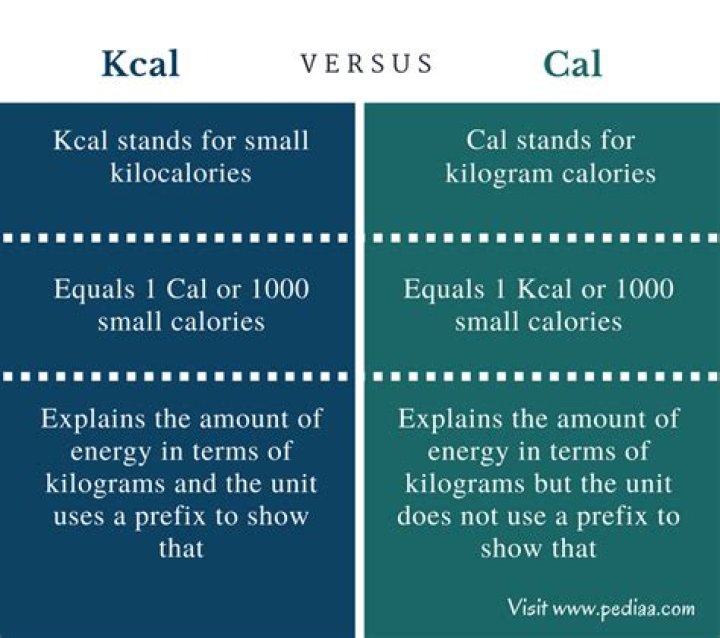
Kcal, or kilocalories, represent a larger unit of energy measurement. One kilocalorie equals 1,000 calories. In the context of nutrition, kcal is the standard unit used to measure the energy content of food and beverages. When you see "calories" listed on a nutrition label, it typically refers to kilocalories.
Why Use Kcal?
Kcal simplifies the process of tracking energy intake. Since most foods contain a significant amount of energy, using kcal provides a more manageable number for daily calculations. For instance, a typical meal might contain 500 kcal rather than 500,000 cal.
Applications of Kcal
- Fitness tracking: Monitoring daily caloric intake and expenditure.
- Weight management: Calculating the number of calories needed for weight loss or gain.
- Meal planning: Designing balanced diets based on kcal content.
Difference Between Cal and Kcal
Understanding the distinction between cal and kcal is crucial for accurate energy measurement. While both terms measure energy, their scale differs significantly:
- Cal refers to a small calorie, representing the energy required to heat one gram of water by one degree Celsius.
- Kcal, or kilocalories, is 1,000 times larger than a small calorie and is the standard unit used in nutrition.
For practical purposes, kcal is more commonly used in everyday life, especially in the context of food labels and fitness tracking.
How Are Calories Measured?
Calories are measured using various methods, with the most common being the bomb calorimetry technique. This method involves burning food in a controlled environment and measuring the heat produced. The resulting energy is then expressed in calories or kilocalories.
Modern Measurement Techniques
Advancements in technology have led to more precise methods of calorie measurement, such as:
- Atwater system: Estimating calorie content based on macronutrient composition.
- Indirect calorimetry: Measuring oxygen consumption and carbon dioxide production to estimate energy expenditure.
The Importance of Calories in Nutrition
Calories play a vital role in maintaining health and wellness. They provide the energy necessary for bodily functions, physical activity, and overall well-being. Understanding your caloric needs helps you maintain a balanced diet and achieve your fitness goals.
Factors Influencing Caloric Needs
- Age: Metabolic rate changes with age, affecting caloric requirements.
- Gender: Men typically require more calories than women due to differences in muscle mass and metabolism.
- Activity level: Physical activity increases caloric needs, while sedentary lifestyles require fewer calories.
Calculating Your Daily Caloric Needs
Determining your daily caloric needs involves several factors, including basal metabolic rate (BMR) and activity level. BMR represents the number of calories your body needs to perform basic functions at rest. Adding activity-related calories gives you a comprehensive estimate of your daily requirements.
Tools for Estimating Caloric Needs
Various online calculators and apps can help you estimate your daily caloric needs. These tools consider factors like age, weight, height, and activity level to provide personalized recommendations.
Calories in Common Foods
Understanding the calorie content of common foods is essential for making informed dietary choices. Below are examples of calorie counts for popular food items:
- Apple: Approximately 52 kcal per medium-sized apple.
- Chicken breast: Around 165 kcal per 100 grams.
- Avocado: Approximately 160 kcal per 100 grams.
Macronutrient Breakdown
Calories in food come from three primary macronutrients:
- Carbohydrates: 4 kcal per gram.
- Proteins: 4 kcal per gram.
- Fats: 9 kcal per gram.
The Benefits of Calorie Tracking
Tracking calories can be a powerful tool for achieving health and fitness goals. By monitoring your intake and expenditure, you gain insight into your dietary habits and make necessary adjustments.
Advantages of Calorie Tracking
- Weight management: Helps you maintain or lose weight by balancing calorie intake and expenditure.
- Improved nutrition: Encourages mindful eating and better food choices.
- Increased awareness: Promotes understanding of portion sizes and nutrient density.
Common Myths About Calories
There are several misconceptions about calories that can hinder your progress. Let's debunk some of the most common myths:
- All calories are created equal: While the energy content is the same, the source of calories affects digestion and metabolism.
- Skipping meals saves calories: This can lead to overeating later and disrupt metabolism.
- Low-calorie foods are always healthy: Some low-calorie options may lack essential nutrients.
Conclusion: Making Informed Choices
In conclusion, understanding kcal and cal is crucial for achieving your health and fitness goals. By grasping the differences between these units and their applications, you can make informed decisions about your dietary intake. Remember to consider factors like age, gender, and activity level when calculating your daily caloric needs.
Take Action: Share this article with friends and family to help them understand the importance of kcal and cal in nutrition. Explore more articles on our site to deepen your knowledge of health and wellness topics.
References:
- World Health Organization. (2023). Nutrition and physical activity guidelines.
- United States Department of Agriculture. (2023). Dietary guidelines for Americans.
- Harvard T.H. Chan School of Public Health. (2023). Calorie counting and weight management.