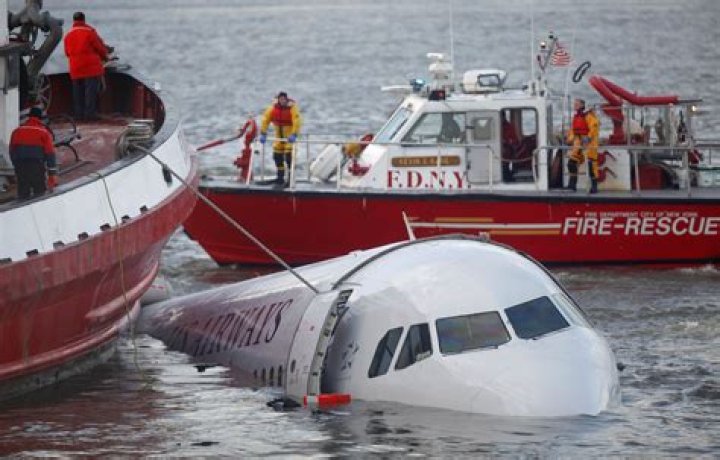
The Hudson Flight Crash remains one of the most remarkable aviation incidents in history, often referred to as the "Miracle on the Hudson." This event captured global attention when US Airways Flight 1549 safely landed on the Hudson River in New York City in January 2009. The story of survival, quick thinking, and extraordinary teamwork has become an iconic moment in aviation history.
The crash of US Airways Flight 1549 was not just a story of survival but also a testament to the professionalism and expertise of its crew, led by Captain Chesley "Sully" Sullenberger. The incident unfolded after the plane struck a flock of geese shortly after takeoff, causing both engines to fail. The rapid decision-making and calm demeanor of the crew were instrumental in ensuring the safety of all passengers and crew members.
This article will delve into the details of the Hudson Flight Crash, examining the events leading up to the incident, the heroic actions taken during the emergency, and the lasting impact on aviation safety. We will explore the factors that contributed to the successful outcome and how this event has influenced aviation protocols worldwide.
Incident Overview: The Miracle on the Hudson
The Hudson Flight Crash occurred on January 15, 2009, when US Airways Flight 1549, an Airbus A320, made an emergency landing on the Hudson River after both engines failed due to bird strikes. The flight, carrying 155 passengers and crew, departed from LaGuardia Airport in New York City bound for Charlotte, North Carolina. The incident gained worldwide attention due to the successful water landing and the safe evacuation of all on board.
Flight 1549's captain, Chesley Sullenberger, quickly assessed the situation and determined that returning to LaGuardia or diverting to Teterboro Airport was not feasible. Instead, he decided to land the aircraft on the Hudson River, a decision that proved to be life-saving. The crew's training and experience were critical in executing the emergency landing successfully.
Timeline of Events
The timeline of the Hudson Flight Crash highlights the rapid sequence of events that unfolded:
- 15:25: Flight 1549 departs from LaGuardia Airport.
- 15:27: The aircraft encounters a flock of Canada geese shortly after takeoff, causing both engines to fail.
- 15:30: Captain Sullenberger communicates with air traffic control, informing them of the engine failure and assessing landing options.
- 15:31: The decision is made to land on the Hudson River.
- 15:33: The aircraft successfully lands on the river, and the evacuation process begins.
Crew Biography
Captain Chesley "Sully" Sullenberger
Captain Chesley "Sully" Sullenberger is widely regarded as a hero for his role in the Hudson Flight Crash. With over 40 years of aviation experience, Sullenberger's expertise and calm demeanor were instrumental in ensuring the safe landing of Flight 1549.
| Name | Chesley B. Sullenberger III |
|---|---|
| Birthdate | January 23, 1951 |
| Occupation | Retired airline pilot, safety consultant |
| Years of Experience | 42 years |
First Officer Jeffrey Skiles
First Officer Jeffrey Skiles played a critical role in assisting Captain Sullenberger during the emergency. His experience and training were essential in managing the situation effectively.
Causes of the Crash
The primary cause of the Hudson Flight Crash was a bird strike involving a flock of Canada geese. The impact caused both engines to fail, leaving the aircraft without power. According to the National Transportation Safety Board (NTSB), bird strikes are a significant hazard in aviation, with over 219,000 reported incidents between 1990 and 2021.
Emergency Procedures
Effective emergency procedures were crucial in ensuring the safety of all on board Flight 1549. The crew followed established protocols, including:
- Assessing the situation and determining the best course of action.
- Communicating with air traffic control to provide updates on the aircraft's status.
- Executing a controlled descent and water landing.
Water Landing Techniques
Key Considerations for Water Landings
Water landings require specific techniques to minimize damage to the aircraft and ensure passenger safety. Key factors include:
- Maintaining a controlled descent rate.
- Ensuring the aircraft's fuselage remains intact upon impact.
- Coordinating with emergency services for swift rescue operations.
Rescue Efforts
The rescue efforts during the Hudson Flight Crash were swift and efficient. Local ferries and emergency response teams quickly arrived at the scene, assisting in the evacuation of passengers and crew. The coordination between various agencies ensured that all on board were safely rescued within minutes of the landing.
Impact on Aviation Safety
The Hudson Flight Crash has had a lasting impact on aviation safety. The incident prompted the aviation industry to reevaluate bird strike prevention measures and enhance emergency preparedness. Key changes include:
- Improved bird detection and management systems at airports.
- Enhanced crew training for emergency situations.
- Advancements in aircraft design to better withstand bird strikes.
Lessons Learned from the Incident
The Hudson Flight Crash serves as a reminder of the importance of preparedness, training, and teamwork in aviation. Key lessons learned include:
- The value of experienced and well-trained pilots in crisis situations.
- The need for robust emergency response systems.
- The significance of ongoing research and development in aviation safety.
Conclusion
The Hudson Flight Crash remains a testament to human resilience and expertise in the face of adversity. The successful water landing of US Airways Flight 1549 was made possible by the quick thinking and professionalism of its crew. This incident has had a profound impact on aviation safety, leading to significant improvements in protocols and technology.
We invite readers to share their thoughts and experiences in the comments section below. Additionally, explore other articles on our site to learn more about aviation safety and remarkable moments in aviation history. Together, let's continue to prioritize safety and innovation in the aviation industry.