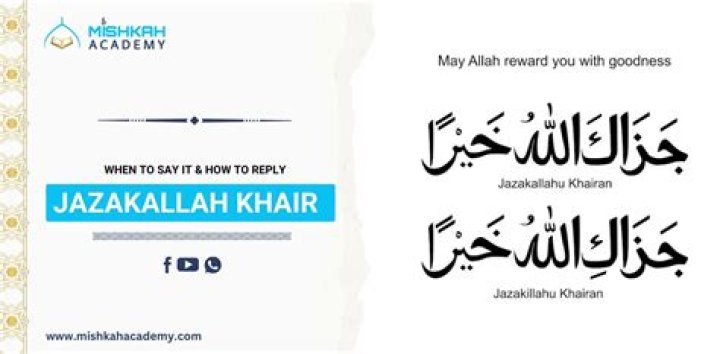
When someone says "Jazakallah," it’s important to respond in a way that reflects gratitude and respect for Islamic tradition. This phrase, which means "May Allah reward you," is commonly used in Muslim communities to express thanks or appreciation. Understanding the appropriate response demonstrates cultural sensitivity and enhances interpersonal relationships.
In this article, we will explore the meaning of "Jazakallah," its significance in Islamic culture, and the proper way to respond. Whether you are familiar with Islamic terminology or new to it, this guide will provide valuable insights into expressing gratitude and fostering meaningful connections.
By the end of this article, you will have a deeper understanding of the phrase, its origins, and how to reply thoughtfully. Let’s dive in and discover the beauty of this Islamic expression.
The Meaning of "Jazakallah"
Understanding the phrase "Jazakallah" is essential to respond appropriately. The term originates from Arabic and translates to "May Allah reward you." It is often used as an expression of gratitude in Islamic culture. When someone says "Jazakallah," they are essentially asking Allah to bless the other person in return for their kindness or good deed.
Key Elements of "Jazakallah"
Breaking down the phrase reveals its deeper meaning:
- Jazak: Meaning "reward" or "compensate."
- Allah: Referring to God in Islam.
This phrase is not only a form of gratitude but also a spiritual acknowledgment of divine intervention in rewarding good actions.
The Origin and Significance
The roots of "Jazakallah" can be traced back to Islamic teachings and traditions. It reflects the Islamic principle of gratitude and the belief that all good comes from Allah. This phrase is often used in daily interactions, emphasizing the importance of acknowledging blessings and expressing thanks.
Historical Context
In Islamic history, gratitude has always been a central theme. The Quran repeatedly emphasizes the importance of thanking Allah for His blessings. "Jazakallah" serves as a verbal reminder of this principle, encouraging believers to maintain a grateful heart.
How to Respond Appropriately
Responding to "Jazakallah" requires a thoughtful and respectful approach. The most common response is "Wa iyyak" (وإيّاك), which means "And you too." This reply acknowledges the blessing and reciprocates the goodwill.
Tips for Responding
Here are some tips to ensure your response is appropriate:
- Use "Wa iyyak" as a standard reply.
- Smile and maintain eye contact to show sincerity.
- Express gratitude verbally or through a simple nod.
By following these guidelines, you can ensure your response is both respectful and culturally sensitive.
Common Variations of "Jazakallah"
While "Jazakallah" is the most common form, there are variations used in different contexts. Understanding these variations can enhance your ability to respond appropriately.
Examples of Variations
- Jazakallah Khair: "May Allah reward you with good." This is often used to express deep gratitude.
- Jazakallah Khairan Katheera: "May Allah reward you with abundant good." This is a more emphatic expression of thanks.
Each variation carries its own level of intensity, allowing you to choose the most suitable response based on the situation.
The Cultural Importance of Gratitude
In Islamic culture, gratitude is not just a social norm but a spiritual practice. It reflects the belief that all blessings come from Allah and should be acknowledged with humility and thankfulness. Expressing gratitude through phrases like "Jazakallah" strengthens community bonds and fosters a spirit of generosity.
Benefits of Practicing Gratitude
Practicing gratitude has numerous benefits, both spiritual and psychological:
- Enhances emotional well-being.
- Strengthens interpersonal relationships.
- Promotes a positive outlook on life.
By embracing gratitude, individuals contribute to a more harmonious and compassionate society.
Etiquette in Responding
Proper etiquette is crucial when responding to "Jazakallah." It involves not only choosing the right words but also demonstrating respect through body language and tone of voice.
Etiquette Tips
- Speak clearly and confidently.
- Use a warm and friendly tone.
- Avoid interrupting the person speaking.
These simple gestures can make a significant difference in how your response is perceived.
Examples of Responses
Here are some examples of how to respond to "Jazakallah" in different scenarios:
Scenario 1: Casual Conversation
Person A: "Jazakallah for your help yesterday."
Person B: "Wa iyyak, it was my pleasure."
Scenario 2: Formal Setting
Person A: "Jazakallah Khair for your guidance."
Person B: "Wa iyyak, may Allah bless you abundantly."
These examples illustrate the versatility of responses based on the context.
Frequently Asked Questions
Here are some common questions about responding to "Jazakallah":
Q1: Can non-Muslims use "Jazakallah"?
Yes, anyone can use "Jazakallah" to express gratitude. It is a universal expression of thanks that transcends religious boundaries.
Q2: Is there a specific time to use "Jazakallah"?
While "Jazakallah" can be used at any time, it is often employed after receiving a favor or kindness from someone.
Expert Advice on Responding
According to Islamic scholars, responding to "Jazakallah" with "Wa iyyak" is the most appropriate and respectful choice. This response aligns with Islamic teachings on gratitude and mutual respect.
Expert Perspective
Dr. Ahmed Al-Sayed, a renowned Islamic scholar, emphasizes the importance of using "Wa iyyak" as a standard reply. He explains, "This phrase encapsulates the essence of gratitude and acknowledges the blessings of Allah."
Conclusion
In conclusion, responding to "Jazakallah" requires a combination of cultural awareness and respect. By using phrases like "Wa iyyak," you demonstrate gratitude and foster positive relationships. Embracing gratitude as a daily practice enhances both personal and communal well-being.
We invite you to share your thoughts and experiences in the comments below. Your feedback helps us create more valuable content. Don’t forget to explore other articles on our site for further insights into Islamic traditions and practices.
Remember, gratitude is a powerful tool that brings people together. Use it wisely and watch your relationships flourish!




