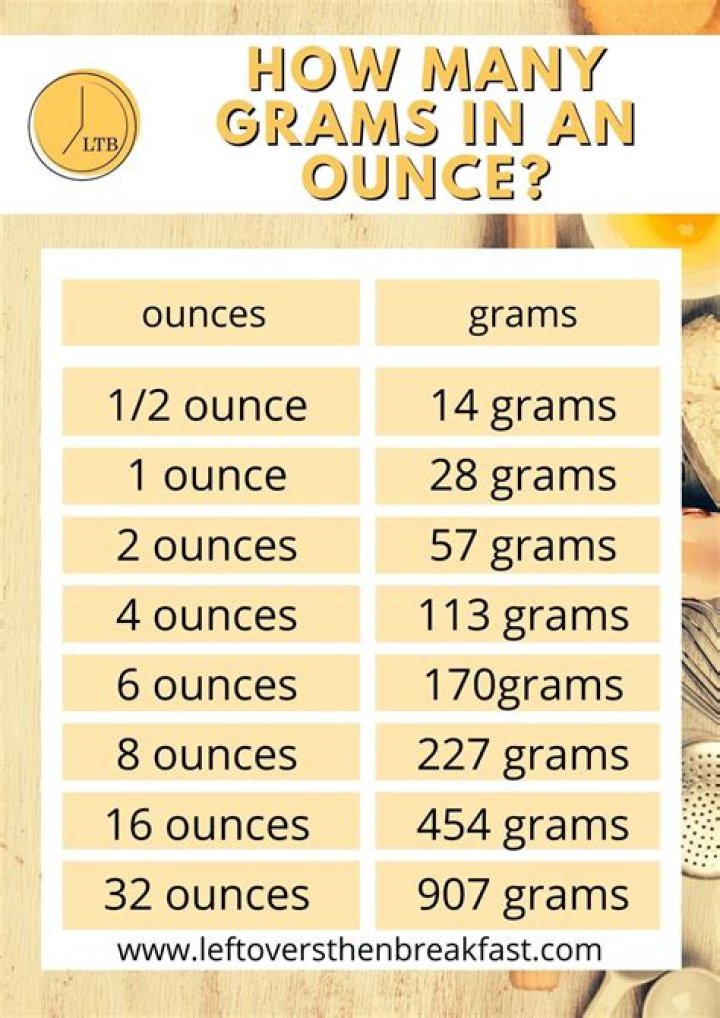
Converting grams into ounces is an essential skill for anyone dealing with measurements in cooking, science, or international trade. Whether you're a home chef experimenting with new recipes or a professional working with precise measurements, understanding how to transfer grams into ounces can save you time and effort. This guide will walk you through the process step by step, ensuring you have all the tools and knowledge you need to make accurate conversions.
In today's globalized world, being able to convert between metric and imperial units is more important than ever. Many recipes and product labels use grams, while others prefer ounces. By mastering the art of transferring grams into ounces, you'll be able to seamlessly navigate between these two systems, making your life easier and your work more efficient.
This article will cover everything you need to know about converting grams into ounces, including the mathematical formula, practical examples, and helpful tips. We'll also explore the history and significance of these units of measurement, ensuring you have a well-rounded understanding of the topic. Let's dive in!
The History of Grams and Ounces
The journey of understanding how to transfer grams into ounces begins with a look at the history of these units of measurement. Grams, part of the metric system, were introduced during the French Revolution in the late 18th century as a standardized way to measure weight. Ounces, on the other hand, have roots in the Roman system of measurement and have been used in various forms throughout history.
Origins of Grams
The gram was originally defined as the absolute weight of 1 cubic centimeter of water at its maximum density. This definition has since been refined, but the gram remains a fundamental unit in the metric system used worldwide.
Origins of Ounces
The ounce, derived from the Latin word "uncia," meaning one-twelfth, was originally one-twelfth of a Roman pound. Over time, different regions developed their own variations of the ounce, leading to the avoirdupois ounce commonly used today in the United States and the troy ounce used for precious metals.
The Formula to Transfer Grams into Ounces
Learning how to transfer grams into ounces requires understanding the basic mathematical formula. The conversion factor between grams and ounces is 1 gram = 0.035274 ounces. To convert grams to ounces, simply multiply the number of grams by this factor.
Step-by-Step Guide
- Identify the number of grams you want to convert.
- Multiply the number of grams by 0.035274.
- The result will be the equivalent weight in ounces.
For example, if you have 100 grams, the calculation would be:
100 grams × 0.035274 = 3.5274 ounces
Practical Examples of Conversion
Now that you know the formula, let's look at some practical examples of how to transfer grams into ounces in real-life situations.
Example 1: Cooking
Imagine you're following a recipe that calls for 250 grams of flour, but your measuring cups are marked in ounces. Using the formula:
250 grams × 0.035274 = 8.82 ounces
You would need approximately 8.82 ounces of flour.
Example 2: International Shipping
If you're shipping a package weighing 500 grams internationally and need to declare its weight in ounces:
500 grams × 0.035274 = 17.637 ounces
The package weighs approximately 17.64 ounces.
Common Mistakes to Avoid
When learning how to transfer grams into ounces, it's easy to make mistakes. Here are some common pitfalls to watch out for:
- Using the wrong conversion factor: Always use 0.035274 as the conversion factor for grams to ounces.
- Rounding errors: Be careful when rounding numbers, as small inaccuracies can add up.
- Confusing units: Double-check whether you're working with grams or milligrams, as the difference can significantly impact the result.
Tools and Resources for Conversion
There are many tools and resources available to help you transfer grams into ounces more efficiently.
Online Conversion Calculators
Websites like Metric Conversions and Unit Converters offer free online tools for converting between grams and ounces. Simply input the number of grams, and the tool will provide the equivalent in ounces.
Mobile Apps
For on-the-go conversions, consider downloading a mobile app like "Unit Converter" or "ConvertPad." These apps allow you to quickly convert grams into ounces and vice versa, making them invaluable for cooking, travel, or work.
Real-World Applications of Grams and Ounces
Understanding how to transfer grams into ounces has numerous real-world applications across various fields.
Cooking and Baking
Chefs and bakers often need to convert between grams and ounces when working with recipes from different countries. Accurate measurements are crucial for achieving the desired taste and texture in dishes.
Science and Medicine
In scientific research and medical settings, precise measurements are essential. Converting between grams and ounces ensures consistency and accuracy in experiments and treatments.
Understanding Variations in Measurements
It's important to note that there are variations in the ounce measurement depending on the context. The avoirdupois ounce is used for general purposes, while the troy ounce is used for precious metals like gold and silver.
Avoirdupois vs. Troy Ounces
The avoirdupois ounce weighs approximately 28.35 grams, while the troy ounce weighs about 31.1 grams. Always verify which type of ounce is being used to avoid confusion.
The Science Behind Measurement Systems
The science behind measurement systems is fascinating and complex. Both the metric and imperial systems have evolved over centuries to meet the needs of society. The metric system, based on powers of ten, offers simplicity and consistency, while the imperial system reflects historical and cultural influences.
Why the Metric System Prevails
The metric system's adoption worldwide can be attributed to its ease of use and universality. By standardizing measurements, it facilitates international trade, scientific research, and everyday life.
Helpful Tips for Accurate Conversions
To ensure accurate conversions when transferring grams into ounces, follow these helpful tips:
- Use a reliable calculator or app to minimize errors.
- Double-check your calculations, especially when dealing with large numbers.
- Keep a conversion chart handy for quick reference.
- Understand the context of the measurement to avoid using the wrong type of ounce.
The Future of Measurement Systems
As technology advances, the way we measure and convert units is likely to evolve. Digital tools and artificial intelligence may streamline the process of transferring grams into ounces, making it even easier and more precise. However, the fundamental principles of measurement will remain unchanged, underscoring the importance of understanding these concepts.
Conclusion
Learning how to transfer grams into ounces is a valuable skill with numerous applications in everyday life. By understanding the history, formula, and practical uses of these units of measurement, you can confidently navigate between metric and imperial systems. Remember to avoid common mistakes, utilize available tools, and stay informed about variations in measurements.
We encourage you to practice converting grams into ounces using the examples and tips provided in this guide. Share your experiences and insights in the comments below, and don't forget to explore other articles on our site for more informative content. Happy measuring!