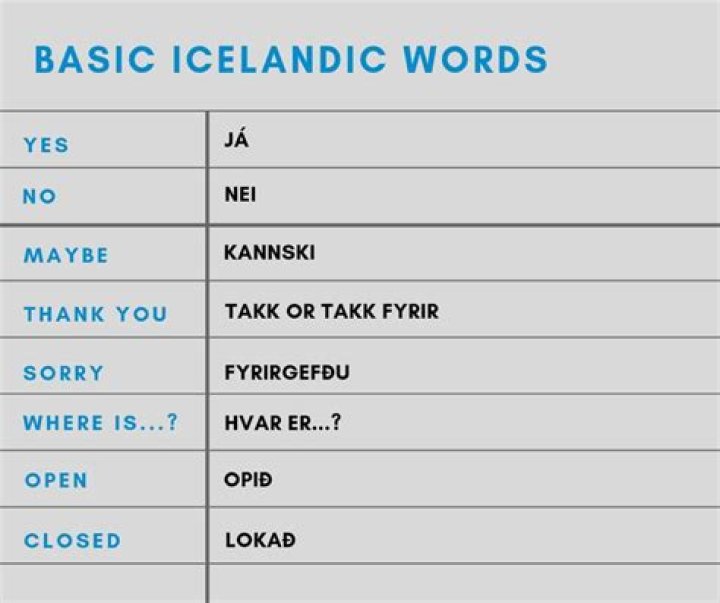
The Iceland language, also known as Icelandic, is a fascinating linguistic treasure that has captivated the interest of language enthusiasts worldwide. As one of the oldest living languages in Europe, Icelandic holds a unique place in the linguistic landscape. Its rich history, cultural significance, and distinct characteristics make it an intriguing subject for exploration. In this article, we will delve into the world of Icelandic, uncovering its secrets and providing valuable insights for those who wish to learn more about this remarkable language.
Icelandic is not just a language; it is a reflection of the country's rich heritage and the resilience of its people. The language has remained remarkably unchanged over centuries, preserving its ancient roots while adapting to modern times. This article aims to provide an in-depth understanding of Icelandic, covering its history, grammar, vocabulary, and cultural importance.
Whether you're a language enthusiast, a traveler planning a visit to Iceland, or simply curious about this Nordic gem, this guide will equip you with the knowledge you need. Let's embark on a journey to discover the beauty and intricacies of the Iceland language.
The Rich History of Icelandic Language
Origins of Icelandic
Icelandic traces its origins back to the Old Norse language, which was spoken by the early Scandinavian settlers who arrived in Iceland during the 9th and 10th centuries. Over time, Icelandic evolved into a distinct language, retaining many of its original characteristics while developing unique features.
Evolution of Icelandic
One of the most remarkable aspects of Icelandic is its resistance to change. Unlike many other languages, Icelandic has remained relatively stable throughout the centuries. This linguistic conservatism is attributed to Iceland's geographic isolation and the strong cultural emphasis on preserving the language's purity.
Key historical milestones in the development of Icelandic include the adoption of Christianity in the year 1000, which introduced Latin influences, and the establishment of the first Icelandic printing press in the 16th century, which helped standardize the language.
Understanding Icelandic Grammar
Icelandic grammar is known for its complexity and richness. It features a highly inflected structure, with nouns, adjectives, and verbs changing form based on grammatical case, gender, and tense. Understanding these aspects is crucial for mastering the language.
Key Features of Icelandic Grammar
- Four Cases: Icelandic nouns decline into four cases: nominative, accusative, dative, and genitive.
- Three Genders: Nouns are categorized into masculine, feminine, and neuter genders.
- Verb Conjugation: Verbs are conjugated according to person, number, tense, mood, and voice.
Exploring Icelandic Vocabulary
Icelandic vocabulary is rich and diverse, drawing from its Old Norse roots while incorporating loanwords from other languages. The language is known for its creativity in forming new words, often by combining existing terms rather than borrowing from foreign languages.
Common Icelandic Words and Phrases
- Halló: Hello
- Takk: Thank you
- Já/Nei: Yes/No
Mastering Icelandic Pronunciation
Pronunciation is a critical aspect of learning Icelandic. The language has a unique phonetic system, with sounds that may be unfamiliar to non-native speakers. However, with practice and exposure, mastering Icelandic pronunciation is achievable.
Tips for Improving Pronunciation
- Listen to native speakers and mimic their intonation.
- Practice common sounds such as "þ" (thorn) and "ð" (eth).
- Use online resources and apps to enhance your pronunciation skills.
Tips for Learning Icelandic
Learning Icelandic can be a rewarding experience, but it requires dedication and persistence. Here are some practical tips to help you on your language-learning journey:
Effective Learning Strategies
- Start with the basics: Learn common phrases and vocabulary.
- Immerse yourself in the language: Watch Icelandic films, listen to Icelandic music, and read Icelandic literature.
- Join language exchange programs: Connect with native speakers to practice your skills.
The Cultural Significance of Icelandic
Icelandic is not just a language; it is an integral part of Iceland's cultural identity. The language reflects the country's rich literary tradition, with works such as the Sagas of Icelanders serving as a testament to its enduring legacy.
Icelandic in Literature and Art
The Sagas, written in Old Icelandic, are considered masterpieces of world literature. These epic tales of adventure, heroism, and family feuds provide valuable insights into the culture and values of medieval Iceland.
Resources for Learning Icelandic
There are numerous resources available for those interested in learning Icelandic. From online courses to mobile apps, these tools can help you acquire the language effectively.
Recommended Resources
- Duolingo: A popular language-learning app that offers Icelandic courses.
- Icelandic Online: A comprehensive online platform for learning Icelandic.
- Books and Courses: Explore textbooks and structured courses for in-depth learning.
Using Icelandic for Travel
If you're planning a trip to Iceland, learning some basic Icelandic phrases can enhance your travel experience. Locals appreciate when visitors make an effort to speak their language, and it can open doors to meaningful interactions.
Essential Travel Phrases
- Hvað kostar þetta?: How much does this cost?
- Var er næsti hleðslu?: Where is the nearest restroom?
- Ég er að ofreiða mig: I'm lost.
Efforts to Preserve Icelandic
Preserving Icelandic is a top priority for Icelanders, who view their language as a vital part of their national identity. Various initiatives, such as language academies and cultural programs, are in place to ensure the language's survival.
Language Preservation Programs
These programs focus on promoting Icelandic in schools, encouraging its use in daily life, and documenting its evolution for future generations.
The Future of Icelandic Language
As the world becomes increasingly interconnected, the future of Icelandic remains a topic of interest. While the language faces challenges from globalization and technological advancements, its resilience and cultural significance ensure its continued relevance.
Efforts to adapt Icelandic to modern contexts, such as creating new terminology for emerging fields like technology and science, demonstrate the language's adaptability and vitality.
Conclusion
In conclusion, the Iceland language is a remarkable linguistic treasure that offers a window into the rich cultural heritage of Iceland. From its ancient roots to its modern adaptations, Icelandic continues to captivate and inspire. By understanding its history, grammar, and cultural significance, we can appreciate its value and contribute to its preservation.
We invite you to share your thoughts and experiences in the comments section below. If you enjoyed this article, please consider sharing it with others who may find it informative. Additionally, explore our other articles on language and culture for more insights into the fascinating world of linguistics.