Malayalam is a fascinating language that has deep historical roots and cultural significance in South India. As the official language of Kerala, it plays a crucial role in shaping the identity of the Malayali community. With its unique script and rich literary tradition, Malayalam continues to thrive in modern times while preserving its ancient heritage.
For those who are new to this beautiful language, Malayalam might seem complex and intriguing. However, as you dive deeper into its grammar, vocabulary, and cultural connections, you'll discover how this language has influenced art, cinema, and literature. Whether you're a linguist, traveler, or simply curious about Indian languages, Malayalam offers endless opportunities for exploration.
In this article, we'll explore the various aspects of Malayalam, including its origins, script, dialects, and cultural impact. We'll also provide practical tips for learning Malayalam and highlight its significance in modern society. By the end of this article, you'll have a comprehensive understanding of why Malayalam deserves recognition as one of the most fascinating languages in the world.
Origins and History of Malayalam
Malayalam, a member of the Dravidian language family, has a history that dates back over a thousand years. Its origins can be traced to the ancient Tamil language, from which it evolved through centuries of linguistic and cultural development. The earliest inscriptions in Malayalam date back to the 9th century CE, showcasing the language's rich heritage.
Evolution of Malayalam
The evolution of Malayalam was influenced by several factors, including interactions with Sanskrit, Persian, and Arabic traders. These interactions enriched the language's vocabulary and grammar, leading to the development of a distinct linguistic identity. Scholars believe that Malayalam separated from Old Tamil around the 9th century, gradually evolving into the language we know today.
Key Historical Milestones
- 9th Century: Earliest inscriptions in Malayalam
- 14th Century: Emergence of Malayalam as a distinct literary language
- 19th Century: Introduction of printing press in Kerala, boosting Malayalam literature
Malayalam Script: A Unique Writing System
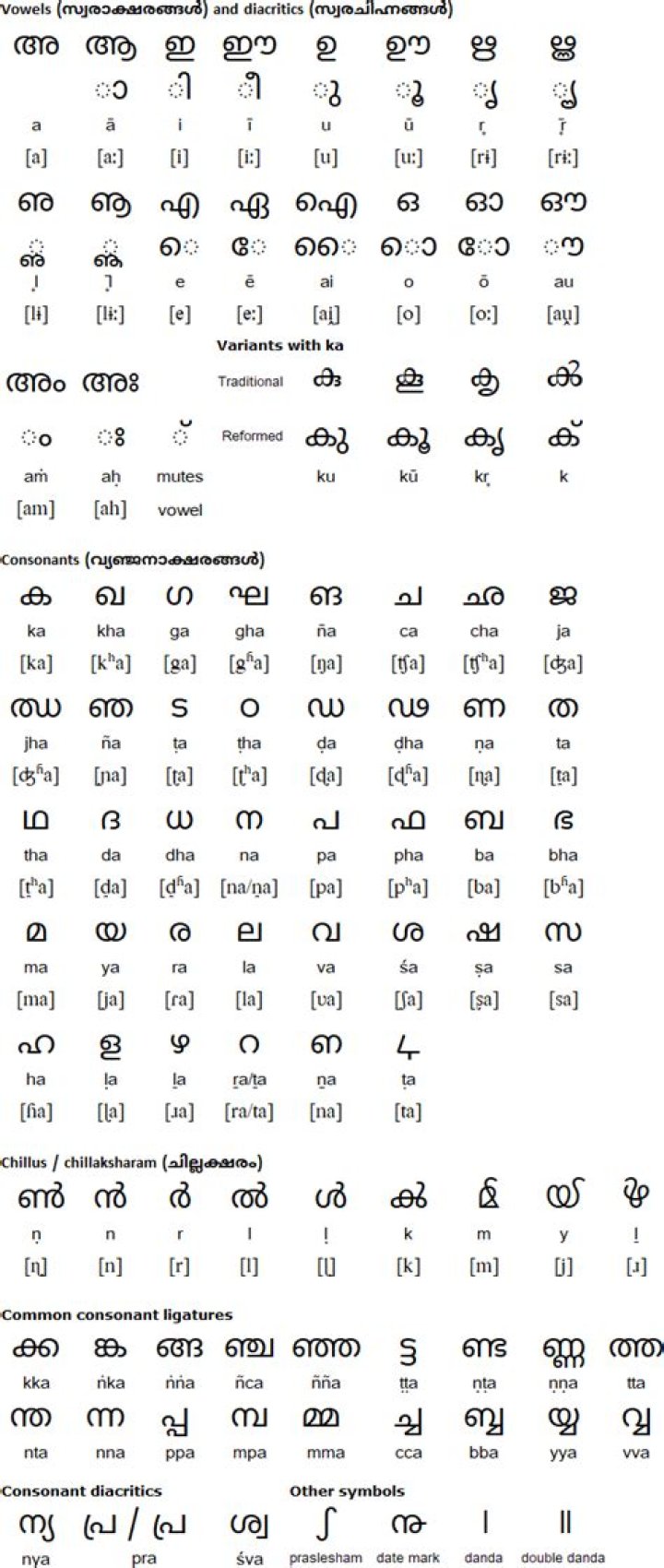
Malayalam script is one of the most distinctive writing systems in the world, characterized by its intricate curves and shapes. It consists of 53 letters, including 15 vowels and 38 consonants, making it a complex yet beautiful script. Over the years, the script has undergone several reforms to simplify its structure and improve readability.
Modern Reforms
In 1971, the Government of Kerala introduced a simplified version of the Malayalam script to make it easier for learners and typists. This reform eliminated many archaic characters and combined similar letters, resulting in a more streamlined writing system. Despite these changes, the traditional script remains popular among scholars and enthusiasts.
Dialects of Malayalam: Regional Variations
Malayalam exhibits significant regional variations, with distinct dialects spoken across Kerala and neighboring regions. These dialects reflect the cultural diversity of the Malayali community and are influenced by factors such as geography, social class, and religious affiliations. While some dialects are mutually intelligible, others may require additional effort to understand.
Major Dialects
- Central Kerala Dialect
- North Kerala Dialect
- South Kerala Dialect
- Malayalam spoken in Lakshadweep
Malayalam Literature: A Treasure Trove of Stories
Malayalam literature boasts a rich tradition spanning over a millennium. From ancient poetry to contemporary novels, Malayalam writers have consistently pushed the boundaries of creativity and expression. The language has produced several literary giants, including Kumaran Asan, Vallathol Narayana Menon, and O. Chandu Menon, whose works continue to inspire readers worldwide.
Key Literary Works
- "Unto the Deep" by O. Chandu Menon
- "Chandalika" by Kumaran Asan
- "Maya Bazaar" by M.T. Vasudevan Nair
Malayalam Cinema: From Classics to Modern Blockbusters
Malayalam cinema is renowned for its artistic brilliance and innovative storytelling. Since the release of the first Malayalam film, "Vigathakumaran," in 1928, the industry has grown into a powerhouse of cinematic excellence. Malayalam films often explore complex themes such as social issues, human relationships, and philosophical dilemmas, earning critical acclaim both domestically and internationally.
Famous Malayalam Filmmakers
- Adoor Gopalakrishnan
- G. Aravindan
- Shyam Benegal
Cultural Significance of Malayalam
Malayalam is more than just a language; it is a vital component of Kerala's cultural identity. The language plays a central role in festivals, rituals, and daily life, shaping the way Malayalis communicate and express themselves. Whether it's the vibrant Onam celebrations or the traditional Kathakali performances, Malayalam remains at the heart of Kerala's cultural heritage.
Cultural Festivals
- Onam
- Vishu
- Thrissur Pooram
Tips for Learning Malayalam
Learning Malayalam can be a rewarding experience, offering insights into a rich cultural world. Here are some practical tips to help you get started:
Beginner's Guide
- Start with the Malayalam alphabet and basic vocabulary
- Practice reading and writing Malayalam script regularly
- Engage with Malayalam media, such as books, movies, and songs
Malayalam Language Today
In modern times, Malayalam continues to thrive as a vibrant language, with millions of speakers worldwide. It is used in education, media, and everyday communication, ensuring its relevance in contemporary society. Despite challenges posed by globalization and technological advancements, efforts are being made to preserve and promote the language for future generations.
Malayalam Speaker Statistics
According to recent estimates, Malayalam is spoken by over 34 million people globally, primarily in Kerala and neighboring states. The language ranks among the top 20 most spoken languages in India, showcasing its widespread usage and significance.
Data Highlights
- Primary language of Kerala
- Spoken in Lakshadweep and neighboring states
- Global diaspora of Malayalam speakers
The Future of Malayalam
As we look to the future, Malayalam is poised to play an even more significant role in global linguistic and cultural landscapes. With advancements in technology and increased accessibility to Malayalam content, the language is likely to attract new learners and enthusiasts. Initiatives to digitize Malayalam literature and promote its usage in digital platforms will further enhance its reach and impact.
Challenges and Opportunities
While challenges such as language dilution and regional dialect differences persist, the growing interest in Malayalam studies and cultural exchange programs offers promising opportunities for the language's growth.
Conclusion
Malayalam is a language that embodies the rich cultural heritage of Kerala and its people. From its ancient origins to its modern-day relevance, Malayalam continues to inspire and influence countless individuals around the world. Whether you're exploring its literature, cinema, or cultural significance, Malayalam offers endless opportunities for discovery and learning.
We encourage you to delve deeper into the world of Malayalam by exploring its resources, engaging with its community, and sharing your experiences with others. Feel free to leave your thoughts and questions in the comments section below, and don't hesitate to explore other articles on our website for more insights into this fascinating language.
References:
- Encyclopedia Britannica
- Indian Census Data
- Malayalam Language and Literature Research Journals




