Calories and kilocalories are terms often used interchangeably in daily conversations, but they carry distinct meanings. Whether you're tracking your daily energy intake or simply trying to understand nutritional labels, knowing the difference between cal and kcal is essential for maintaining a healthy lifestyle. This article will delve into the distinctions between these two units of measurement and their significance in nutrition science.
Energy measurement plays a critical role in understanding how our bodies function. Calories and kilocalories are the primary units used to quantify the energy derived from food. However, many people remain confused about their differences and how they impact our health. This article aims to clarify these concepts and provide practical insights into their application.
By the end of this guide, you'll have a clearer understanding of what calories and kilocalories represent, how they're measured, and why they matter in your daily life. Let's dive in!
What Are Calories?
Calories are units of energy used to measure the heat produced by burning food. In scientific terms, a calorie is the amount of energy required to raise the temperature of one gram of water by one degree Celsius. However, when we talk about calories in the context of nutrition, we're usually referring to kilocalories.
This distinction can cause confusion, as nutritional labels and fitness apps often use "calories" to mean kilocalories. Understanding this difference is crucial for anyone looking to manage their energy intake effectively.
How Are Calories Measured?
Calories are measured using a device called a calorimeter. This instrument calculates the energy content of food by burning it and measuring the heat produced. While this method is precise, most modern nutritional information is based on standardized tables rather than direct measurement.
What Are Kilocalories?
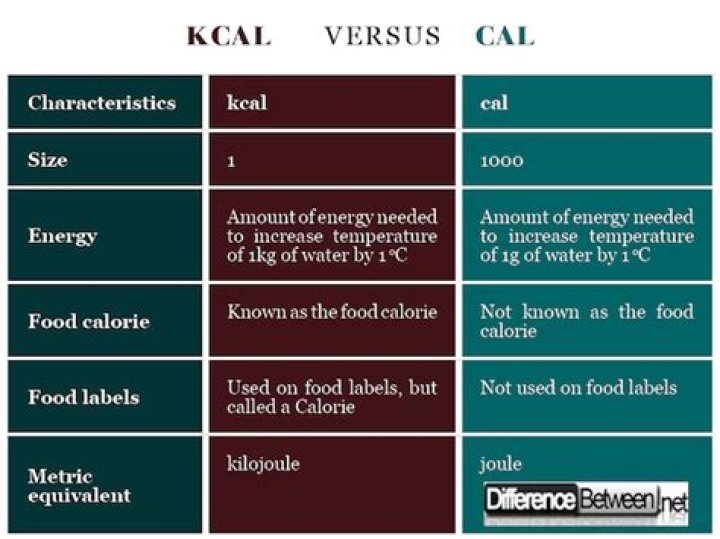
A kilocalorie (kcal) is equal to 1,000 calories. In nutritional science, the term "kilocalorie" is more accurate when referring to the energy content of food. For example, when a nutritional label says a food item contains 200 calories, it actually means 200 kilocalories.
This terminology can be confusing for consumers, as the term "calorie" has become shorthand for kilocalories in everyday language. Understanding this distinction helps clarify nutritional information and avoid misunderstandings.
Why Are Kilocalories Important?
Kilocalories are essential for maintaining bodily functions. They provide the energy needed for basic metabolic processes, physical activity, and overall health. Without sufficient kilocalories, the body cannot function properly, leading to fatigue, weakness, and other health issues.
Cal vs Kcal: Key Differences
The primary difference between calories and kilocalories lies in their magnitude. While a calorie represents a small unit of energy, a kilocalorie represents a much larger unit. Here are the key distinctions:
- Definition: A calorie is the energy needed to raise the temperature of one gram of water by one degree Celsius, while a kilocalorie is 1,000 times that amount.
- Usage: Calories are rarely used in nutrition, whereas kilocalories are the standard unit for measuring food energy.
- Context: In scientific research, calories are often used for precise measurements, while kilocalories are used in everyday nutrition contexts.
Understanding these differences is crucial for interpreting nutritional information accurately.
Cal to Kcal Conversion
Converting calories to kilocalories is straightforward. Since one kilocalorie equals 1,000 calories, dividing the number of calories by 1,000 gives you the equivalent kilocalories. For example:
- 500 calories = 0.5 kilocalories
- 2,000 calories = 2 kilocalories
This simple conversion helps clarify nutritional information and ensures accurate energy tracking.
Why Is Conversion Important?
Conversion between calories and kilocalories is important for anyone tracking their energy intake. Whether you're monitoring your diet for weight loss or athletic performance, understanding the units of measurement ensures consistency and accuracy in your calculations.
Calories in Food
Food is the primary source of calories for the human body. Different types of macronutrients contribute varying amounts of energy. Here's a breakdown:
- Carbohydrates: Provide 4 calories per gram
- Proteins: Provide 4 calories per gram
- Fats: Provide 9 calories per gram
- Alcohol: Provides 7 calories per gram
Understanding these values helps in making informed dietary choices and balancing energy intake.
Factors Affecting Caloric Content
Several factors influence the caloric content of food, including:
- Portion size
- Cooking method
- Ingredient composition
For example, frying food in oil increases its caloric content compared to baking or steaming. Awareness of these factors enables better dietary planning.
Importance of Calories in Nutrition
Calories play a vital role in nutrition by providing the energy necessary for bodily functions. They fuel everything from breathing and digestion to exercise and mental activity. However, consuming too many or too few calories can lead to health problems.
Excess calorie intake often results in weight gain and related conditions such as obesity, diabetes, and heart disease. Conversely, insufficient calorie intake can cause malnutrition, fatigue, and weakened immune function. Balancing calorie intake with expenditure is key to maintaining optimal health.
How Do Calories Impact Health?
Calories influence health in several ways:
- Energy balance: Maintaining a balance between calorie intake and expenditure supports weight management.
- Metabolism: Adequate calorie intake ensures proper metabolic function.
- Physical performance: Sufficient calories enhance athletic performance and endurance.
Understanding these impacts highlights the importance of mindful calorie consumption.
Measuring Energy in Daily Life
Measuring energy intake and expenditure is crucial for maintaining a healthy lifestyle. Modern tools such as fitness trackers, smartphone apps, and food scales make tracking calories easier than ever. These technologies provide real-time data on calorie consumption and expenditure, empowering individuals to make informed decisions.
However, it's important to remember that these tools are estimates and may not always be 100% accurate. Combining technology with professional guidance ensures a comprehensive approach to energy management.
Common Tools for Measuring Calories
- Fitness trackers
- Nutrition apps
- Food scales
- Calorimeters
Using these tools consistently can help you achieve your health and fitness goals more effectively.
Common Myths About Calorie Counting
Calorie counting is a popular method for managing weight, but it's often misunderstood. Here are some common myths:
- All calories are equal: While all calories provide energy, their sources affect how the body processes them. For example, calories from whole foods are generally healthier than those from processed foods.
- Calorie counting guarantees weight loss: While tracking calories can aid weight loss, it's not the only factor. Hormonal balance, sleep, and stress also play significant roles.
- Calorie counting is necessary for everyone: While some people benefit from calorie tracking, others may find it restrictive or unnecessary. Listening to your body's natural hunger cues can also be effective.
Debunking these myths helps create a more balanced and realistic approach to nutrition.
Understanding Your Calorie Needs
Calorie needs vary based on several factors, including age, gender, weight, activity level, and overall health. Calculating your daily calorie requirements involves assessing your basal metabolic rate (BMR) and activity level.
For example, a sedentary adult male may need around 2,000-2,500 calories per day, while an active female might require 2,200-2,700 calories. These numbers can vary widely depending on individual circumstances.
How to Calculate Your Calorie Needs
To calculate your calorie needs, consider the following steps:
- Estimate your BMR using a formula such as the Harris-Benedict equation.
- Factor in your activity level using a multiplier (e.g., 1.2 for sedentary, 1.55 for moderately active).
- Adjust for weight loss or gain goals as needed.
Consulting a healthcare professional or registered dietitian can provide personalized guidance for your unique needs.
Conclusion
In conclusion, understanding the difference between calories and kilocalories is essential for managing your energy intake effectively. By grasping the distinctions between these units, converting between them accurately, and applying this knowledge to your daily life, you can make informed decisions about your diet and health.
We encourage you to share this article with others who might find it helpful and leave your thoughts in the comments below. For more insights into nutrition and health, explore our other articles and resources. Together, we can build a healthier, more informed community!
Data Source: National Center for Biotechnology Information, World Health Organization




