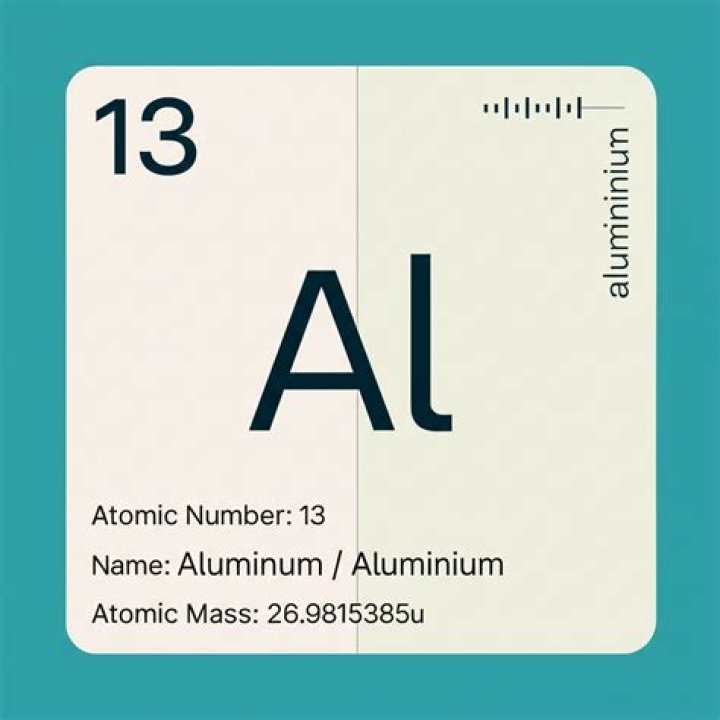
Aluminium versus aluminum is a topic that often sparks confusion among people worldwide. While both terms refer to the same metal, their usage varies depending on geographical locations and linguistic preferences. Understanding the nuances between aluminium and aluminum can provide valuable insights into global standards, industrial applications, and cultural influences.
The debate surrounding aluminium versus aluminum dates back to the early 19th century when the element was first discovered. Sir Humphry Davy, the British chemist who identified the metal, initially named it "aluminum." However, over time, the International Union of Pure and Applied Chemistry (IUPAC) adopted "aluminium" as the official name, leading to differences in usage across countries.
In this comprehensive article, we will explore the origins of these terms, their applications in various industries, and the impact of linguistic preferences on global communication. By the end of this article, you will have a clear understanding of why both terms coexist and how they influence modern science and technology.
History of Aluminium/Aluminum
Aluminium, or aluminum as it is known in some regions, has a fascinating history that dates back to ancient civilizations. Evidence suggests that humans have been using aluminum compounds for thousands of years, even before the element itself was isolated. The Greeks and Romans, for instance, used alum, a compound containing aluminum, for dyeing fabrics and medical purposes.
In 1825, Danish chemist Hans Christian Oersted successfully isolated aluminum for the first time. However, it was Sir Humphry Davy who first proposed the name "aluminum" in 1808. The name was later modified to "aluminium" by the IUPAC to align with other metallic elements ending in -ium, such as calcium and magnesium.
Key Milestones in the History of Aluminium
- 1808: Sir Humphry Davy coins the term "aluminum."
- 1825: Hans Christian Oersted isolates aluminum for the first time.
- 1886: Charles Martin Hall and Paul Héroult independently develop the Hall-Héroult process, making aluminum production more cost-effective.
- 20th Century: Aluminum becomes a key material in aerospace, automotive, and construction industries.
Why Two Names Exist
The dual naming of aluminium versus aluminum primarily stems from linguistic and cultural differences. While "aluminium" is the internationally recognized name, "aluminum" remains the preferred term in the United States and Canada. This discrepancy arises from historical and scientific debates over nomenclature.
In the early 19th century, Sir Humphry Davy's original name, "aluminum," was widely accepted. However, the addition of the extra "i" in "aluminium" was proposed to maintain consistency with other metallic elements. Despite this, the American Chemical Society (ACS) retained "aluminum" as the official name in the U.S., leading to the coexistence of both terms.
Properties of Aluminium/Aluminum
Aluminium/Aluminum is renowned for its unique properties, making it one of the most versatile metals in the world. Its lightweight nature, high strength-to-weight ratio, and excellent corrosion resistance make it ideal for a wide range of applications. Below are some key properties of aluminium:
Key Properties of Aluminium/Aluminum
- Lightweight: Approximately one-third the weight of steel.
- Corrosion Resistance: Forms a protective oxide layer when exposed to air.
- High Strength-to-Weight Ratio: Ideal for structural applications.
- Excellent Thermal and Electrical Conductivity: Used in heat exchangers and electrical wiring.
These properties make aluminium indispensable in industries ranging from aerospace to packaging.
Applications in Various Industries
Aluminium/Aluminum finds applications in virtually every industry due to its versatile properties. From transportation to construction, the metal plays a critical role in modern infrastructure. Below are some of the key industries where aluminium is widely used:
Applications in Transportation
- Aerospace: Used in aircraft structures and engine components.
- Automotive: Employed in car bodies and engine parts for improved fuel efficiency.
- Rail Transport: Utilized in train carriages and high-speed rail systems.
Applications in Construction
- Facades: Provides aesthetic appeal and durability in building exteriors.
- Roofing: Offers lightweight and corrosion-resistant solutions.
Environmental Impact
While aluminium is a sustainable material due to its recyclability, its production process has significant environmental implications. The extraction and refining of bauxite, the primary ore of aluminium, require substantial energy and emit greenhouse gases. However, advancements in technology are gradually reducing the environmental footprint of aluminium production.
Recycling aluminium consumes only 5% of the energy required for primary production, making it one of the most recycled metals globally. This highlights the importance of promoting sustainable practices in the aluminium industry.
Comparison Between Aluminium and Aluminum
Although aluminium and aluminum refer to the same element, their usage varies significantly across regions. Below is a comparison of the two terms:
Geographical Usage
- Aluminium: Widely used in countries following British English, such as the United Kingdom, Australia, and India.
- Aluminum: Predominantly used in the United States and Canada.
Despite the difference in spelling, both terms are understood globally, and their usage does not affect the material's properties or applications.
Global Usage Trends
The global demand for aluminium continues to grow, driven by increasing urbanization and industrialization. According to the International Aluminium Institute, global aluminium production reached 68 million tonnes in 2022, with China being the largest producer.
Emerging markets in Asia, Africa, and Latin America are expected to drive future growth in the aluminium industry. Additionally, the shift towards sustainable materials is boosting the adoption of recycled aluminium in various sectors.
Manufacturing Process
The manufacturing of aluminium involves several stages, starting from the extraction of bauxite to the production of finished products. Below is an overview of the process:
Steps in Aluminium Production
- Bauxite Mining: Extraction of raw ore from mines.
- Refining: Conversion of bauxite into alumina through the Bayer process.
- Electrolysis: Production of aluminium through the Hall-Héroult process.
- Rolling and Casting: Shaping the metal into various forms for industrial use.
Each stage of the process requires meticulous control to ensure the quality and purity of the final product.
Economic Importance
Aluminium/Aluminum is a vital component of the global economy, contributing significantly to various industries. Its lightweight nature and corrosion resistance make it indispensable in sectors such as aerospace, automotive, and packaging. According to the World Bank, the global aluminium market is projected to grow at a compound annual growth rate (CAGR) of 6% by 2030.
The economic importance of aluminium extends beyond its industrial applications. Recycling aluminium generates significant revenue and reduces the environmental impact of primary production. This underscores the need for sustainable practices in the aluminium industry.
Future Trends and Innovations
As technology advances, the future of aluminium looks promising. Innovations in production processes, such as the development of inert anodes, aim to reduce energy consumption and emissions. Additionally, the growing demand for lightweight materials in the automotive and aerospace sectors is driving research into new aluminium alloys.
Smart materials, such as shape-memory alloys and self-healing composites, are emerging as potential game-changers in the aluminium industry. These innovations could revolutionize applications in construction, transportation, and electronics.
Conclusion
In conclusion, the debate over aluminium versus aluminum highlights the fascinating interplay of science, culture, and linguistics. While both terms refer to the same element, their usage reflects regional preferences and historical developments. Understanding the properties, applications, and environmental impact of aluminium is crucial for its sustainable utilization in various industries.
We invite you to share your thoughts on this article and explore other topics related to materials science and engineering. Your feedback and engagement help us create more informative and engaging content. Thank you for reading!
References:
- International Aluminium Institute. (2022). Global Aluminium Production Report.
- World Bank. (2023). Aluminium Market Trends and Projections.
- International Union of Pure and Applied Chemistry (IUPAC). (2022). Nomenclature of Inorganic Chemistry.




